I started yoga when my daughter was born. Not because I had some spiritual awakening. Not because I wanted a new identity. But because my back was absolutely wrecked.
I had spent months rocking a very high-percentile baby who did not believe in being put down. My shoulders lived somewhere near my ears. My lower back throbbed constantly. I felt like my body no longer belonged to me… it belonged to feeding schedules and contact naps and the relentless repetition of early motherhood.
Yoga at home became my way to just… exhale.
It was the one hour of the day that was just mine. No one needed anything. No one was touching me. No one was crying. I could move slowly, and stretch the tightness out of my spine. And when I lay on the mat at the end and felt something close to peace.
I didn’t care how it looked. I didn’t care what I was “achieving.” It wasn’t about progression. It was about relief.
Over the next few years, I got stronger; more flexible, more confident. I started to be able to move in ways I never thought I would. And somewhere in that steady progress, I thought: “maybe I should train to be a yoga teacher.” After all, I loved it. I was (relatively) good at it.. so it felt like a natural next step.
Here’s why I wish I hadn’t…
My focus changed
Before training, my practice was about how it felt. After training, it slowly became about how it looked.
Social media didn’t invent that pressure, but it amplified it. My feed was full of teachers folding into splits with effortless smiles, floating into arm balances, building beautifully curated personal brands around their practice.
I started to absorb the message that to be taken seriously, you had to look advanced. Flexible. Polished. So I started to push myself too hard.
I stretched harder. I held poses longer. I practised through pain and just told myself discomfort meant progress.
I became obsessed with not being able to do the splits fully. It stopped being something my body would open into naturally over time and became a problem to fix. Eventually, in trying to force it, I tore a ligament.
The irony is that yoga, traditionally, isn’t about that at all.
In classical philosophy, asana – the physical poses – are just one small part of an eight-limbed path. The foundations include non-violence (ahimsa), self-discipline, breath, meditation, awareness. The physical practice was never meant to be competitive or performative. It wasn’t designed to feed ego.
But mine did.
Instead of softening my ego, my practice started quietly inflating it. It became about being impressive. About proving something. About being “good enough” to stand at the front of a room.
That shift was subtle at first. But it changed everything.
The practice stopped being mine
The second shift was harder to spot… I stopped asking what my body needed. Instead, I started asking what other people might want.
I would be in the middle of a stretch and suddenly think:
“Would this flow well in a class?”
“Is this too slow? Too fast?”
Would people think my music choice is odd? (For the record: slow RnB and moonlight remixes of Biggie and Ed Sheeran absolutely hit during hip openers.)
“Are swear words allowed in yoga spaces? Should I be more serene? More traditional? Less… myself?”
I’d pull myself out of a pose early because I was analysing transitions instead of feeling the stretch. I’d stay in poses that did nothing for my body because I thought, “This would be accessible for older students.”
Even when I was alone on my mat, I was no longer alone. I was mentally teaching a hypothetical room of people. The practice that once felt deeply personal became filtered through imagined expectations.
And I didn’t realise how much that was costing me until I felt the joy draining out of it.
It became a chore
There was also the structure of training itself.
The logged hours. The training diary. The breakdown of which poses had been practised. The pressure to accumulate enough time to qualify.
None of this is wrong – it’s necessary for proper teaching. But for me, something shifted the minute yoga became something I had to do. As someone who has always bristled at rigid structure, my sanctuary quietly became an obligation.
If I skipped a day, I felt behind. If I practised, I felt like I was ticking a box. If I rested, I felt guilty.
The rebel in me – the part that had once come to yoga for freedom – started resisting it entirely. The mat no longer felt like a place to unwind. It felt like a task waiting to be completed.
And that was the biggest loss of all.
So what did I actually learn?
This isn’t about yoga teachers being the problem. They aren’t. Holding space for other people is generous, skilled, and deeply valuable work.
The problem was that I tried to turn something sacred – something that had healed me – into something productive.
We live in a culture that tells us constantly:
“If you’re good at something, you should monetise it.”
“If you love something, you should build a service. If you’re talented, you’re wasting it if you’re not profiting from it.”
But not everything needs to become a side hustle. Not everything needs to scale. Not everything needs an audience.
Some things can just be yours.
Training to be a yoga teacher didn’t ruin yoga for me forever. It just showed me how quickly joy can shift when it becomes performative. How easily passion can tangle itself up with ego. How fast something nourishing can turn into pressure.
And maybe the real growth wasn’t becoming a teacher. Maybe it was recognising that I didn’t have to.
Now, when I roll out my mat, I’m slowly learning how to come back to what it was in the beginning: a tired mum with a broken back, stretching in a quiet room, not trying to impress anyone.
Just trying to feel better.
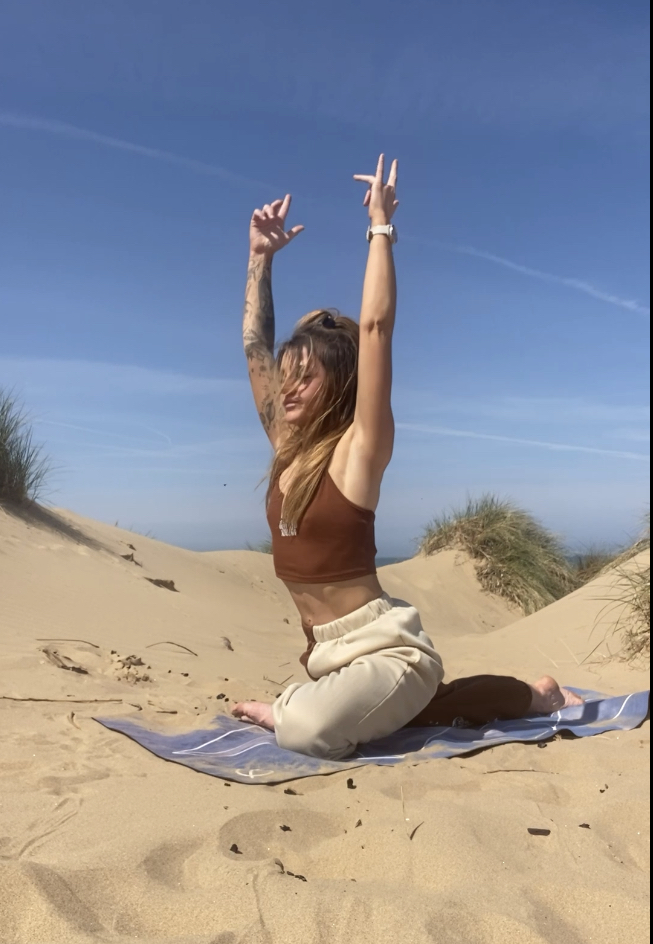

TDS Editor, and resident witch.
I share witchy tips, home and garden renovation ideas, and fun places me and my daughter have been on our travels.
Follow me on TikTok @scarlet.wonderland

