You spot it at first as a faint grey patch in the corner of the bedroom, or a cluster of black dots creeping above the shower.
At first it’s easy to ignore. But over a damp winter, or a steamy summer, those patches quietly spread, and suddenly the room that’s meant to feel like your sanctuary starts to feel a little less fresh…

Why mould on walls is more than just an eyesore
Mould on walls is incredibly common in UK homes. Our climate is damp, many houses are older, and with rising energy costs a lot of us keep windows closed to hold onto heat. Unfortunately, that combination creates the perfect environment for condensation to build up on cold surfaces such as external walls and window frames.
And mould isn’t just a cosmetic problem.
It can trigger coughing, wheezing, headaches and flare-ups of asthma or allergies. That matters even more if you have young children, are pregnant, or share your home with someone whose immune system needs extra care.
For many women already juggling work, family and an endless to-do list, dealing with mould becomes one more unexpected mental load. The good news is that tackling it effectively is often simpler than it seems, once you understand what’s causing it.
What type of wall mould are you dealing with?
You don’t need a microscope or a lab coat to identify what you’re dealing with, but recognising the basic type can help you decide how to get rid of mould on walls.
Most mould that appears on painted walls or tiles in UK homes is black mould, which tends to show up as dark speckled patches that slowly spread. It often appears around windows, in bathrooms, or behind furniture placed against cold external walls.
Sometimes you might notice white, grey or light green patches instead. These are usually other forms of mildew or mould, but they’re typically caused by the same thing: persistent moisture that never quite dries out.
However, there are situations where mould may signal a bigger issue.
Peeling paint, persistent damp patches, or white crystal-like residue on plaster can indicate a structural moisture problem such as a leak or rising damp. If that’s the case, cleaning the surface alone won’t solve the problem.
In simple terms: treating mould without addressing the moisture source is like mopping the floor while the tap is still running.
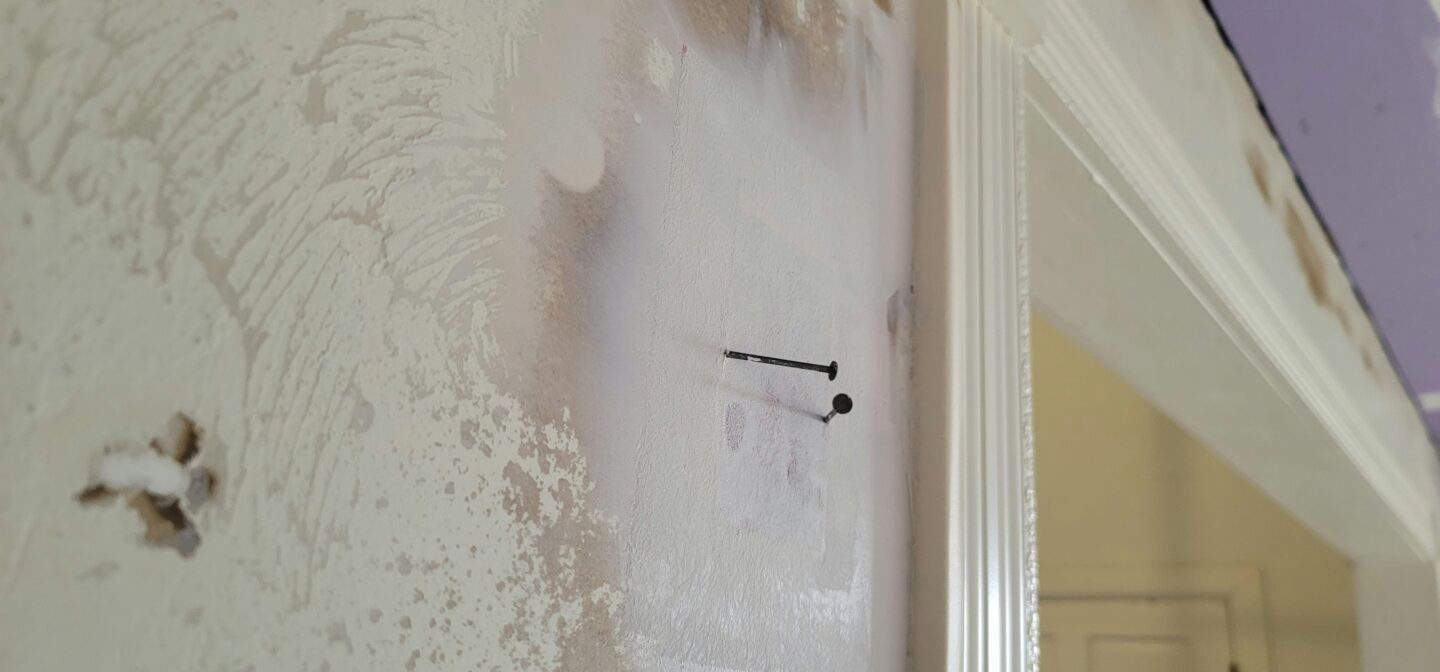
A safe, step-by-step mould cleaning routine
When you notice mould, the instinct is often to grab bleach and start scrubbing. While that might feel productive, it’s not always the safest or most effective approach — especially in small spaces like bathrooms or bedrooms.
A more thoughtful routine protects both your health and your walls.
1. Prepare the space first
Before cleaning, open a window or switch on an extractor fan to improve airflow. Wearing gloves and a simple mask can help prevent irritation from mould spores or cleaning products.
Move nearby furniture or fabrics away from the affected area and place an old towel along the skirting board to catch drips or debris.
It might feel like over-preparing, but it helps stop mould spores spreading around the room.
2. Choose the right cleaner
The best cleaner depends on the surface and the size of the mould patch.
Small areas on tiles or grout may respond well to milder cleaning solutions. Painted walls, however, often require products specifically designed to remove mould without damaging the paint.
Always read product labels carefully and avoid mixing different cleaning chemicals together. Testing a small hidden area first can also prevent accidental damage to paint or plaster.
3. Let the product do the work
Once the cleaner is applied, resist the urge to start scrubbing immediately.
Most mould treatments need time to penetrate the growth and break it down. Leaving the product to sit for the recommended time usually makes cleaning far easier.
Afterward, gently wipe the area with a damp cloth or sponge rather than aggressively scrubbing the wall. Rinse your cloth regularly so you’re removing spores rather than spreading them around.
When finished, wash or dispose of any cloths used during cleaning.
How to stop mould coming back
Cleaning is only half the solution. Preventing it from returning is all about controlling moisture in your home.
1. Reduce everyday moisture
Many daily routines quietly add humidity to your home.
Long showers, boiling pots without lids, and drying clothes indoors all release moisture into the air. Simple habits — like opening a window after a shower, using pan lids while cooking, or running a dehumidifier when drying laundry — can make a noticeable difference.
Even wiping condensation from windows on cold mornings can help prevent mould from developing.
2. Let your walls breathe
One of the most common places mould appears is behind furniture.
When wardrobes, sofas or bookcases sit tightly against external walls, air can’t circulate properly. This creates a colder, damper pocket that mould thrives in.
Pulling furniture just a few centimetres away from the wall can improve airflow and reduce condensation.
3. Don’t ignore recurring damp
If mould repeatedly returns to the same area despite cleaning and good ventilation habits, there may be an underlying issue.
Cold, clammy walls, mould spreading across ceilings, or flaking plaster can point to leaks, insulation problems or structural damp.
If you’re renting, document the issue with photos and notify your landlord. Homeowners may benefit from a damp survey or inspection by a professional.
A cleaner home means a clearer head
Dealing with mould can feel like just another household problem demanding your attention.
But taking a little time to understand why it appears — and how to prevent it — can make a big difference to your home environment.
A drier, fresher space doesn’t just protect your walls. It supports better sleep, easier breathing and that subtle but powerful sense of calm that comes from walking into a room and feeling like your home is truly working for you again.

Just a group of real women dealing with life’s daily struggles! Want to write for us? Email: hello@thedailystruggle.co.uk

