In the first six months, your baby’s development is rapid and foundational. Age-appropriate toys are more than just entertainment; they are essential tools that stimulate brain growth, strengthen vision, and develop motor skills.
Choosing the right toy at the right time is key to helping your baby master crucial milestones. This guide breaks down the best toys for 0-6 month olds, explaining the specific developmental purpose behind each recommendation.
The First Three Months (0-3 Months): Sensory
The world is a blur for newborns. For the first three months, development is all about refining the senses. Your baby is working hard to improve their eyesight, locate sounds, and discover their own body. The goal here is gentle, focused stimulation that prevents overstimulation.
Key Developmental Focus
- Sight: Improving focus and tracking movement.
- Sound: Recognising voices and locating the source of noise.
- Motor: Practicing head lifts during tummy time.
The Best Toys for 0-3 Months
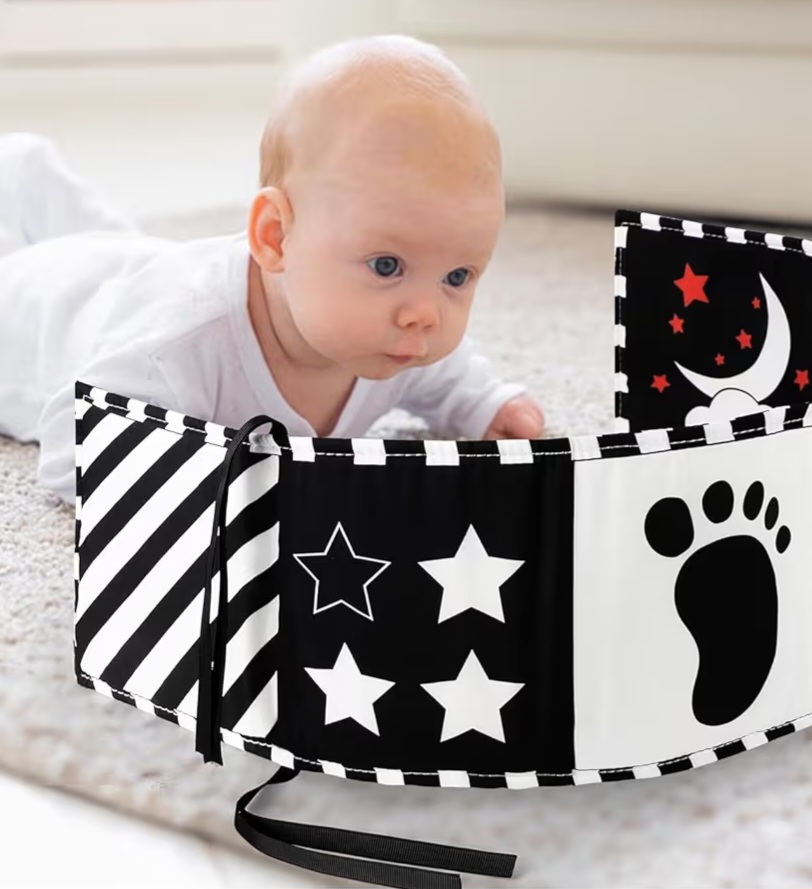
High-Contrast Black & White Cards
A baby’s vision is still immature. They can only see clearly about 8-12 inches away. High-contrast patterns (like black and white) are the easiest for them to interpret, helping to strengthen their optic nerve and encourage visual tracking and focus.
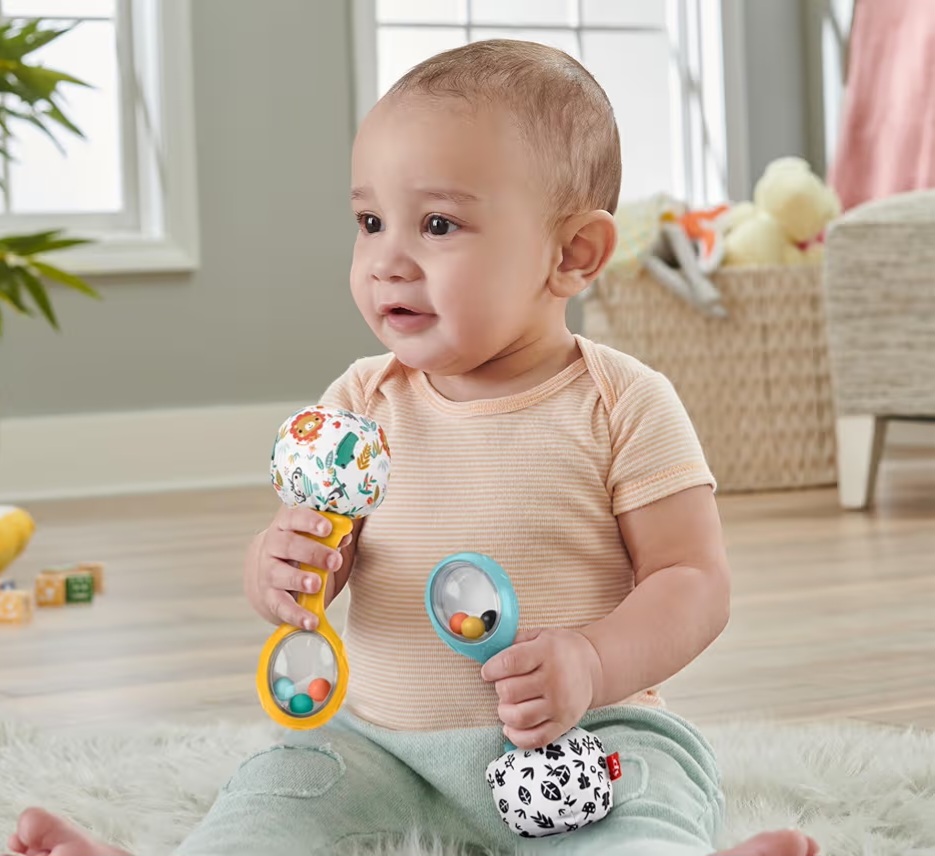
Soft, Lightweight Rattles
At first, your baby won’t grasp the rattle, but they will respond to the sound. Shaking the rattle off to one side encourages them to turn their head and locate the noise, which is crucial for hearing development and neck strength. The soft texture is also safe for accidental facial bumps.
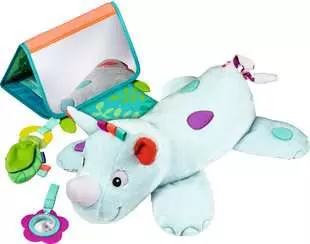
Tummy Time Cushion & Mirror
Many babies initially dislike tummy time. A comfortable support cushion provides gentle lift, helping them hold their chest up with less effort, making the experience more tolerable. The shatterproof mirror gives them a compelling reason to lift their head (looking at their reflection!). This combination directly strengthens the neck, shoulder, and upper back muscles needed for future rolling and sitting while providing essential visual motivation.
Wrist & Ankle Rattles
These wearables are a gentle way to introduce the concept of cause and effect. When your baby accidentally moves their hand or foot, they hear a sound, helping them realize, “I can make that happen!” This connection is a critical first step in developing gross motor control.
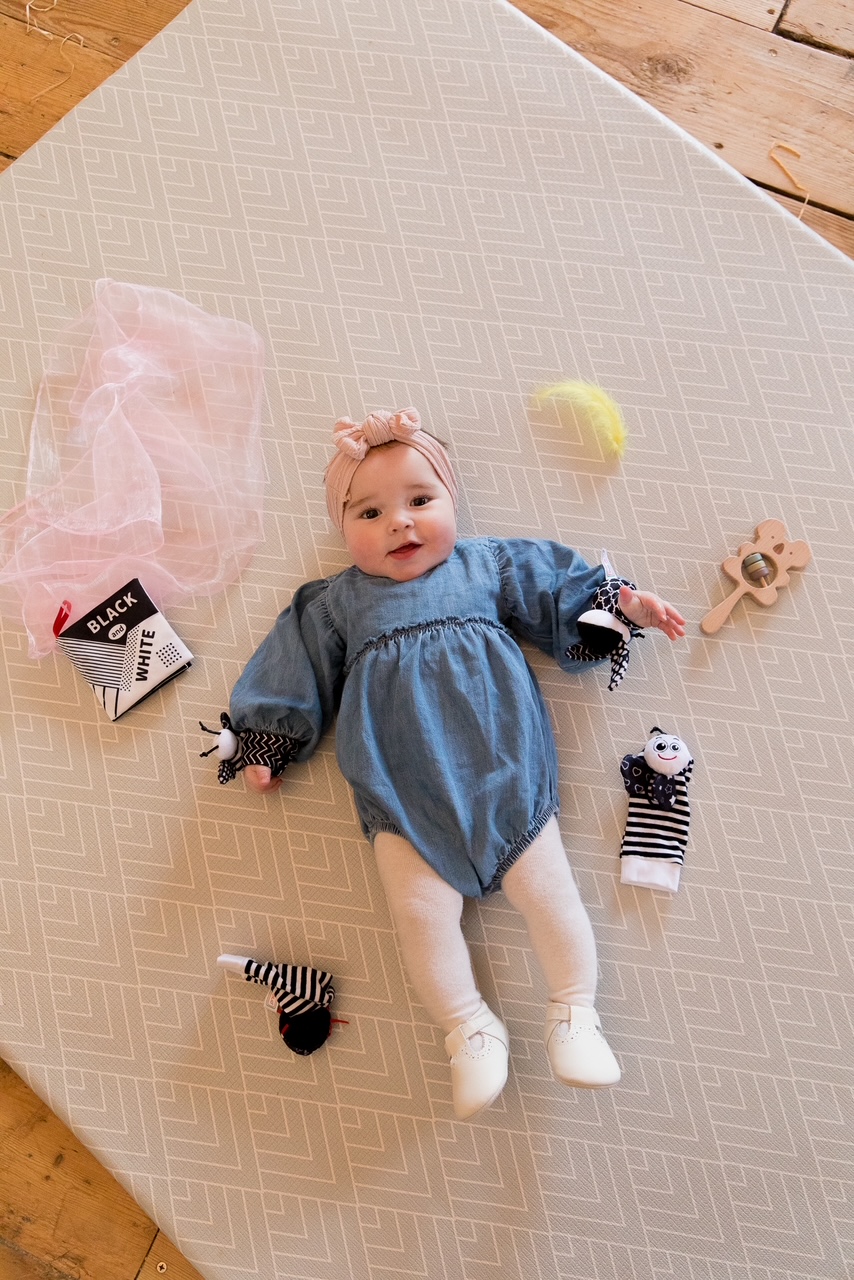
The Next Stage (3-6 Months): Mastering the Hands
Around three months, the “batting” turns into purposeful reaching, and the hands finally close around objects with an intentional grasp. Your baby is now figuring out how to control their limbs and, crucially, everything goes straight to their mouth to explore texture and soothe sore gums. Playtime becomes interactive and highly tactile.
Key Developmental Focus
- Fine Motor Skills: Grasping, transferring objects from hand to hand, and intentional release.
- Gross Motor Skills: Sitting with support, controlling the body for reaching, and coordinating hand-eye movement.
- Oral Exploration: Mouthing objects to explore shape and texture, and providing relief during teething.
The Best Toys for 3-6 Months
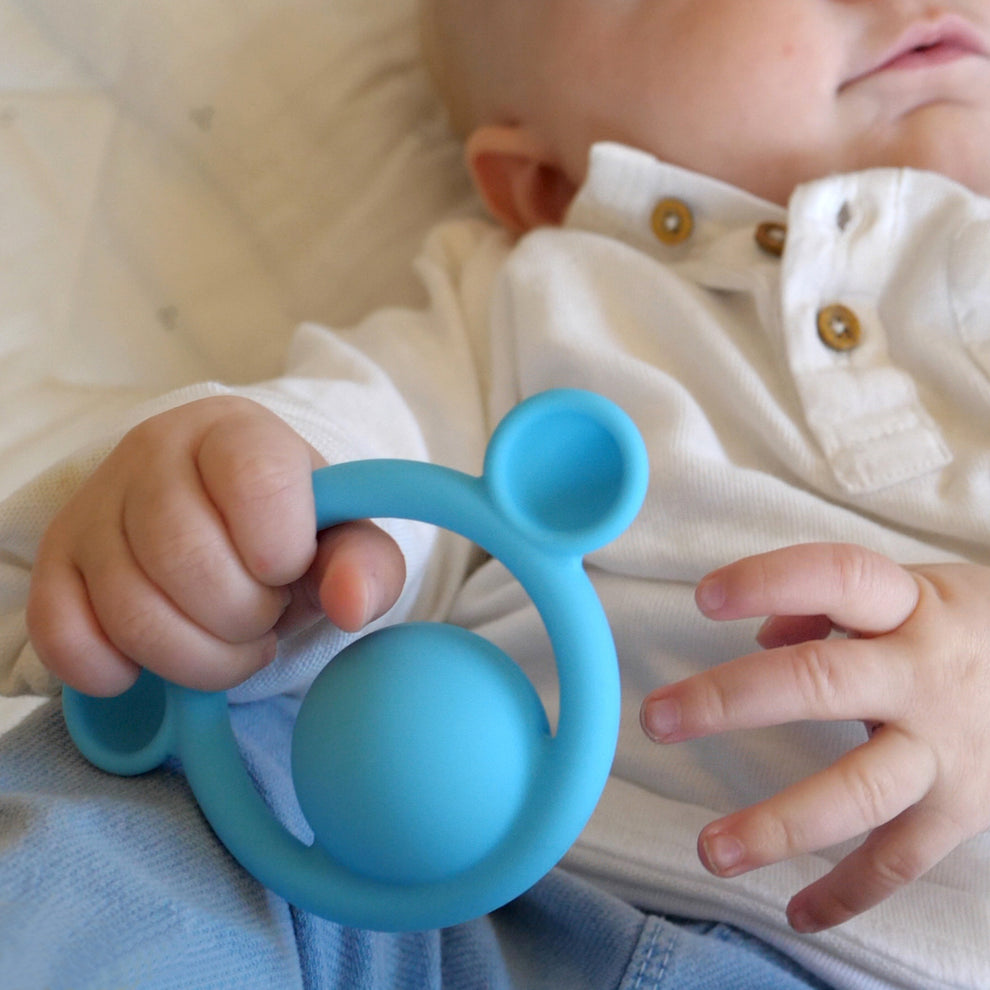
Teethers (Ring / Silicone)
As babies begin to explore objects with their mouths, a safe teether is essential. Different shapes and textures (bumpy, smooth, ridged) help soothe gums and train the mouth muscles. Easy-to-grip rings support their developing pincer grasp and hand-to-mouth coordination.
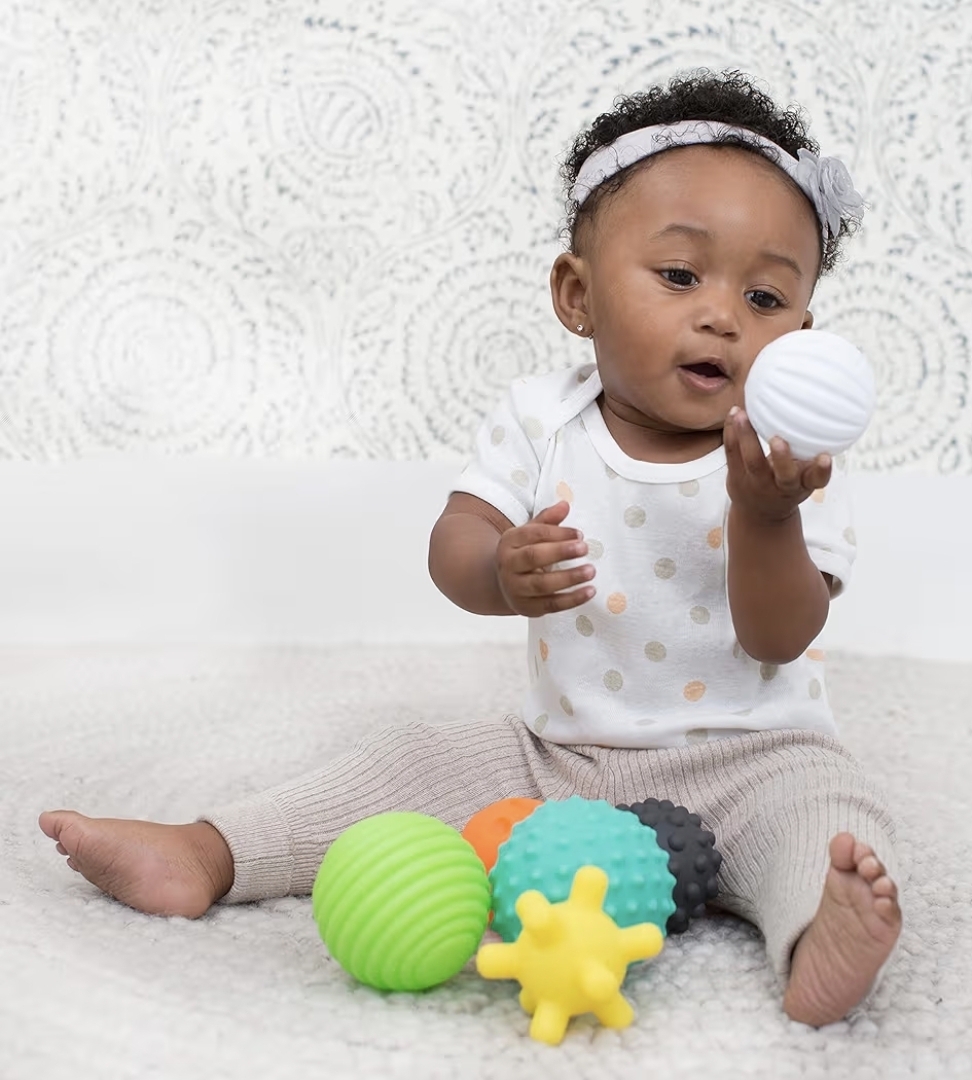
Textured Balls & O-Balls
These lightweight, flexible balls with large holes are perfect for a developing grip. The variety of textures (soft spikes, ridges, netting) gives rich sensory input to their fingers. Rolling the ball encourages scooting and reaching, boosting gross motor skills and tracking.
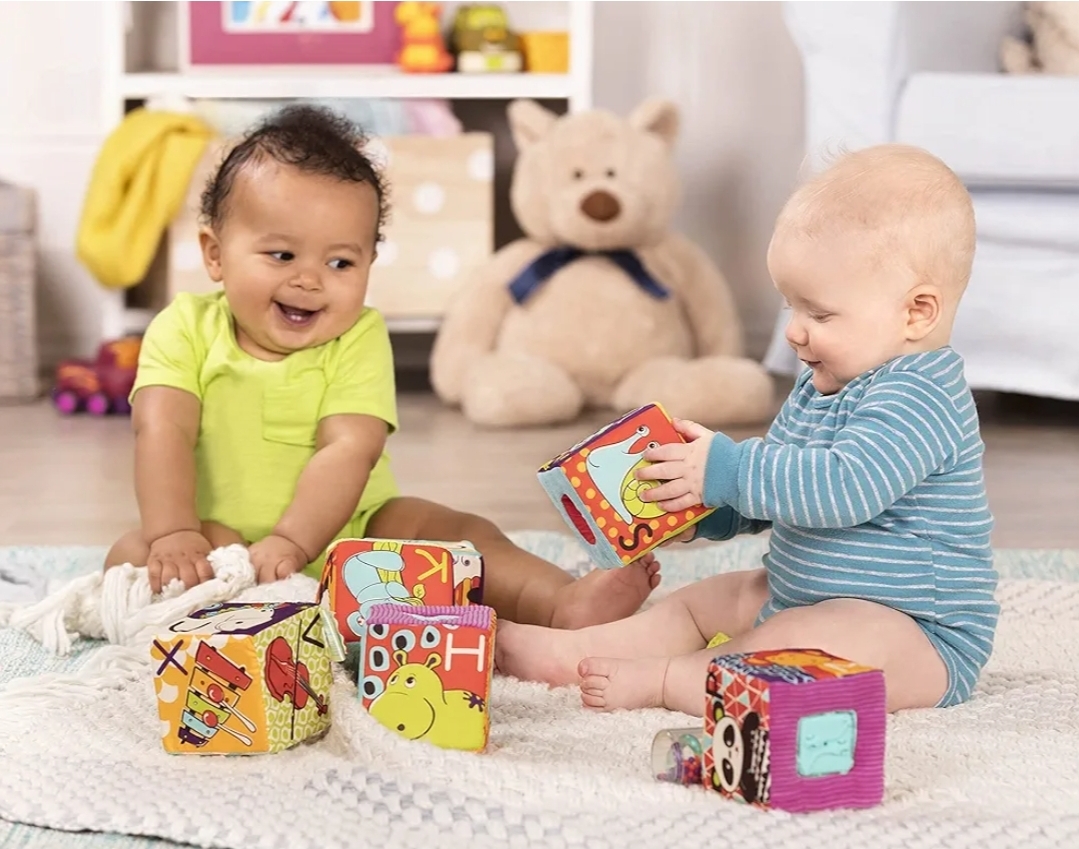
Soft Fabric Blocks/Cubes
Blocks are introduced here not for stacking (that comes later!), but for grasping and mouthing. They are often lightweight, make a crinkle sound, and have loops or tags, offering multiple sensory experiences. They help a baby practice transferring objects from one hand to the other—a complex fine motor milestone.
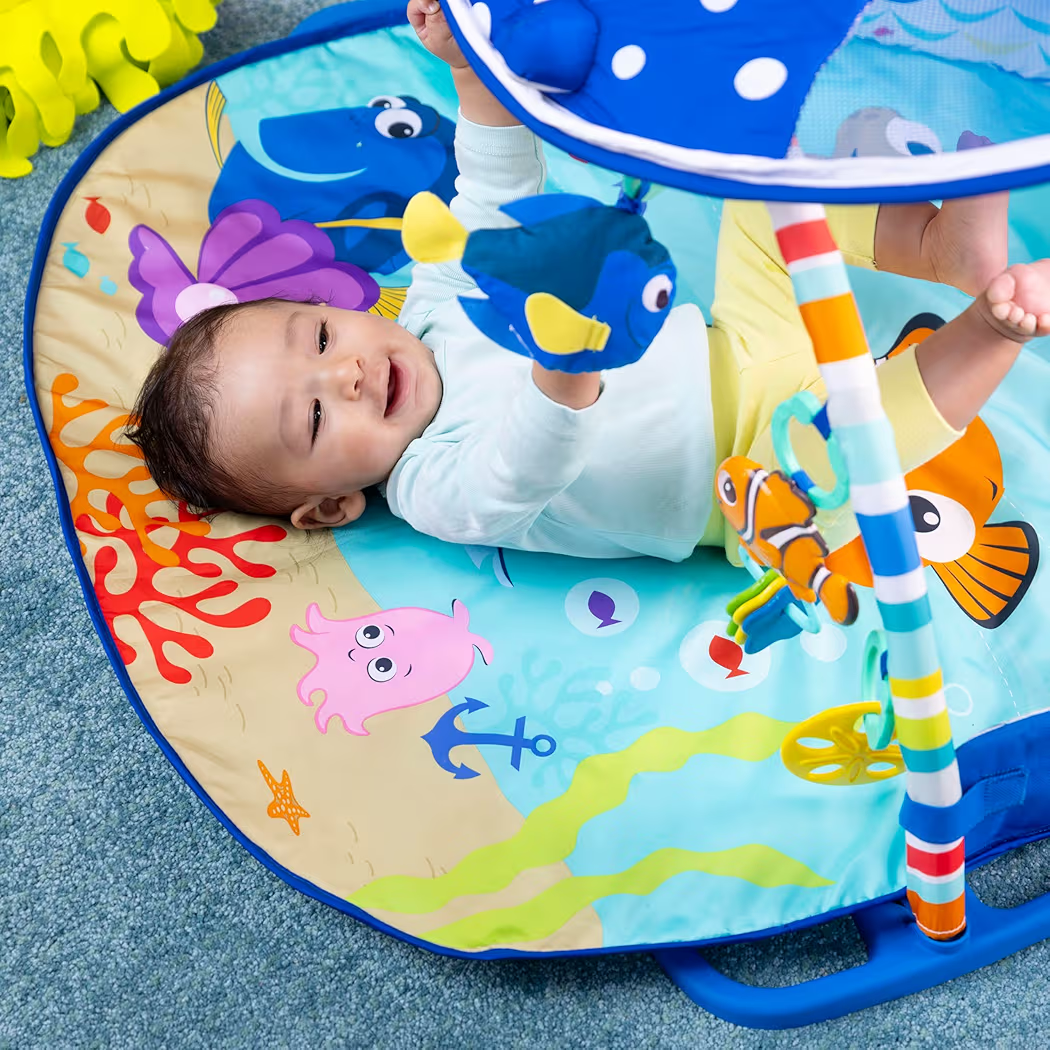
Play Mat / Activity Center with Hanging Toys
Now that your baby can reach and grasp intentionally, a mat with dangling toys is highly engaging. Reaching up and pulling the toys helps refine hand-eye coordination and strengthens arm and shoulder muscles. Make sure the toys are removable so they can be held and explored up close.
Toys for Calming and Comfort
While the main goal of play is to stimulate learning, a tired or overstimulated baby won’t engage. The other critical role of a “toy” in this age range is to provide comfort and help establish predictable sleep routines. These items are your tools for winding down.
The Best Toys for Bedtime
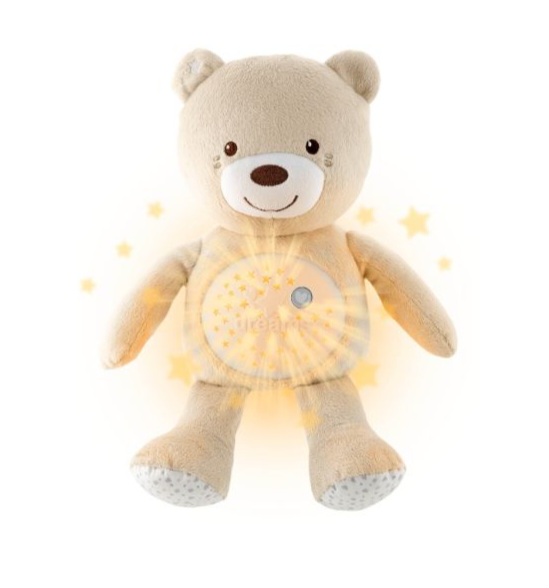
Projector Plush Toys
These combine a soft, cuddly texture with gentle sights and sounds. The soft lights projected onto the ceiling give your baby something to focus on and relax as they lie down. The built-in music or white noise is a positive sleep association that signals it’s time to rest.
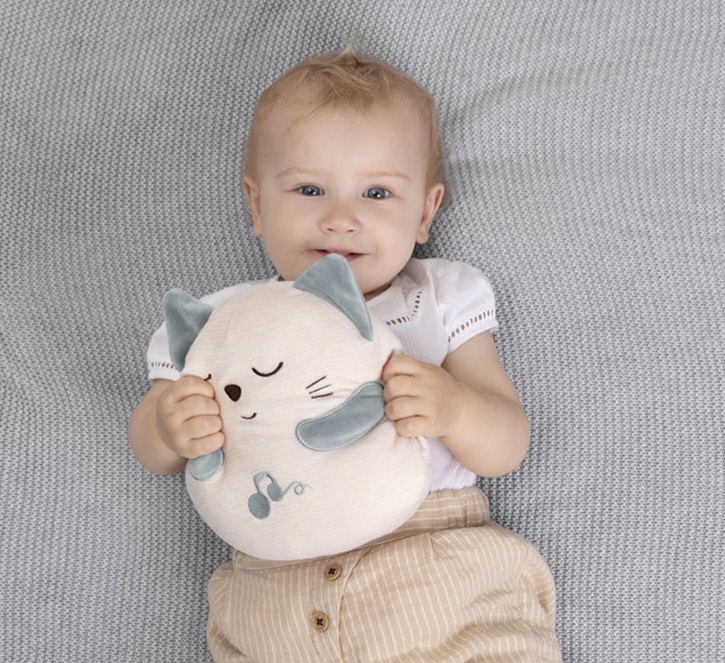
Vibrating / heartbeat Comfort Toys
Toys that mimic the low-frequency sound and feel of a cat’s purr or a gentle heartbeat have a profound calming effect on newborns and infants. They help mask startling noises and promote a sense of security, assisting in the crucial early step of self-soothing.
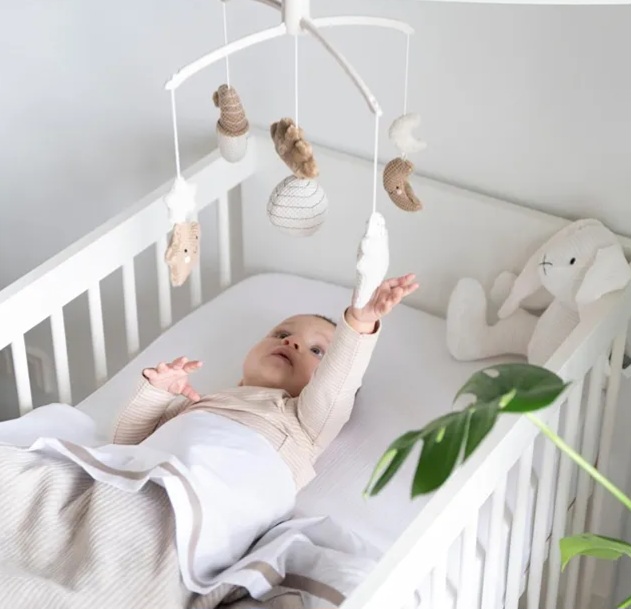
Soft Musical Mobiles
Not above the crib for active play, but for gentle movement during the settling process. The repetitive motion and soft, non-stimulating melody can become a powerful and recognisable cue for sleep.
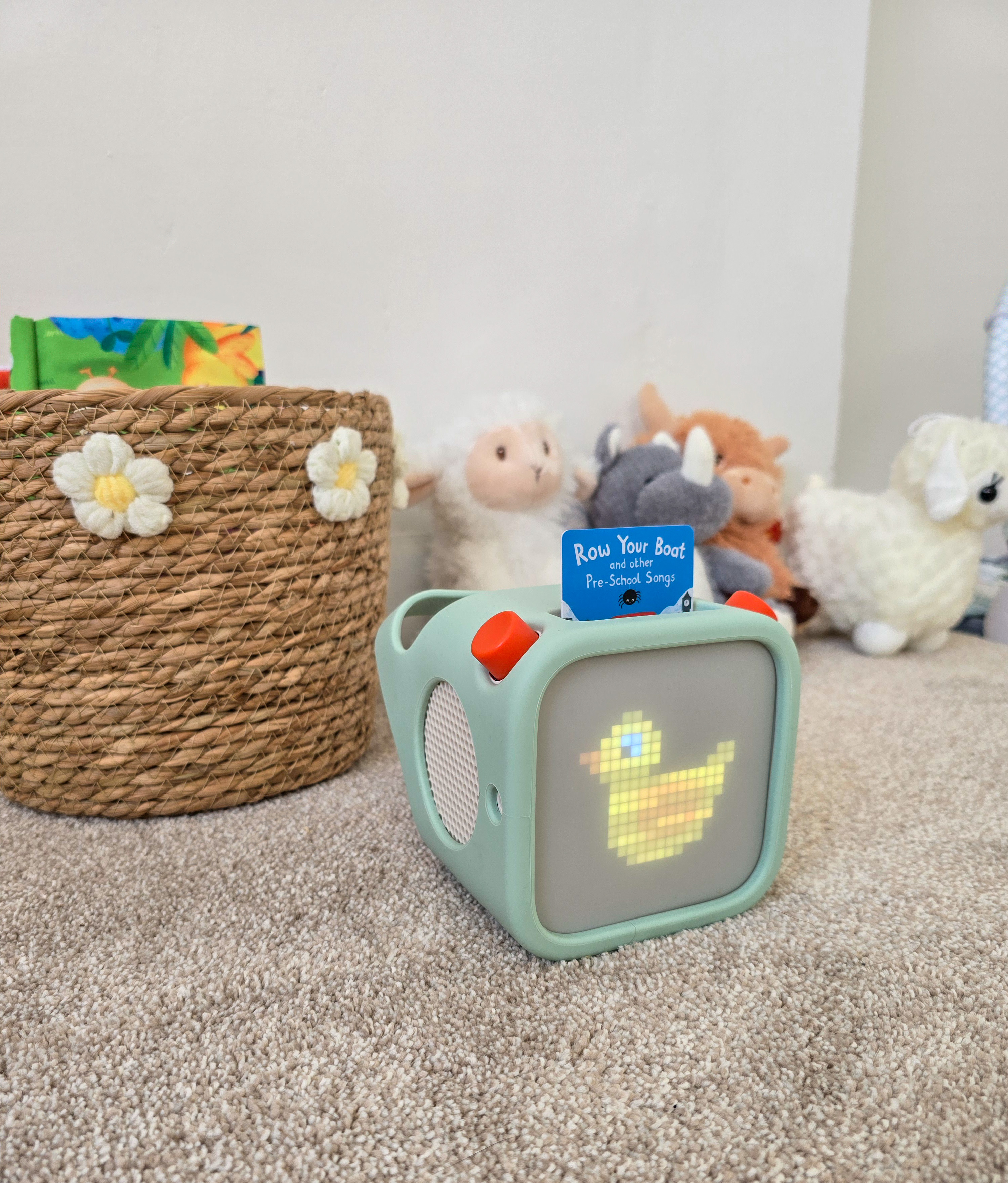
Yoto Player or Yoto Mini
Think of this as your screen-free nursery hub. For a 0-6 month old, Yoto serves as a high-quality sound machine. Using white noise or heartbeat cards helps with sleep regulation, while playing gentle nursery rhymes introduces the rhythms of language—essential for long-term auditory development.
Safety, Cleanliness, and Connection
Choosing the right toys sets the stage for powerful early development, but a few final considerations are key to keeping playtime fun and safe.
Essential Playtime Tips
- Prioritise Safety First: Always check toys for small parts, broken pieces, or sharp edges that could pose a choking hazard. For this age group, anything smaller than a golf ball is potentially dangerous. If a toy breaks, discard it immediately.
- Keep it Clean: Since nearly everything goes into your baby’s mouth during the 3-6 month stage, regular cleaning is a must. Most hard plastic or silicone toys can be washed with warm water and mild soap, or sanitised with baby-safe cleaning wipes. Always check the manufacturer’s cleaning instructions.
- The Best Toy is You: Remember that no expensive toy can replace your interaction. The most beneficial element of playtime is your presence—talking, singing, making silly noises, and simply describing what the baby is holding. This parental interaction builds language skills and strengthens your bond far more than any plastic gadget.
By providing safe, appropriate tools and your loving attention, you are giving your baby the very best start on their exciting developmental journey!

Outdoor Adventure, Travel, and Family Editor.
I share stories from my adventures with my daughter, Daisy, practical gear advice, and tips for navigating family life from my experiences.
Follow Sam’s adventures on Instagram @sams_adventures_

