
We started using Yoto when our baby was three months old, not because we were looking for a new toy, but because we needed something consistent.
At that stage, sleep was easily disrupted—especially during transitions. A walk in the pram would often end with her waking as soon as we got home, when the background noise dropped away and the house felt suddenly silent. We were looking for a way to keep things steady, even as we moved between places.

That’s how the Yoto Mini and later the Yoto Player became part of our routine. Although they’re usually associated with older children, after 2 months of using it, we found they worked surprisingly well from infancy – used simply for white noise, gentle music and, eventually, stories.
Using Yoto With a Baby for White Noise
When we first introduced Yoto at three months old, it wasn’t about entertainment. It was about sound.
From ages 0-6 months old, babies don’t necessarily need stories or structure – they need familiarity. We started with white noise, gentle piano music, nursery rhymes, and calming soundscapes, using both the Yoto Mini and the Yoto Player in exactly the same way: as a consistent audio backdrop.
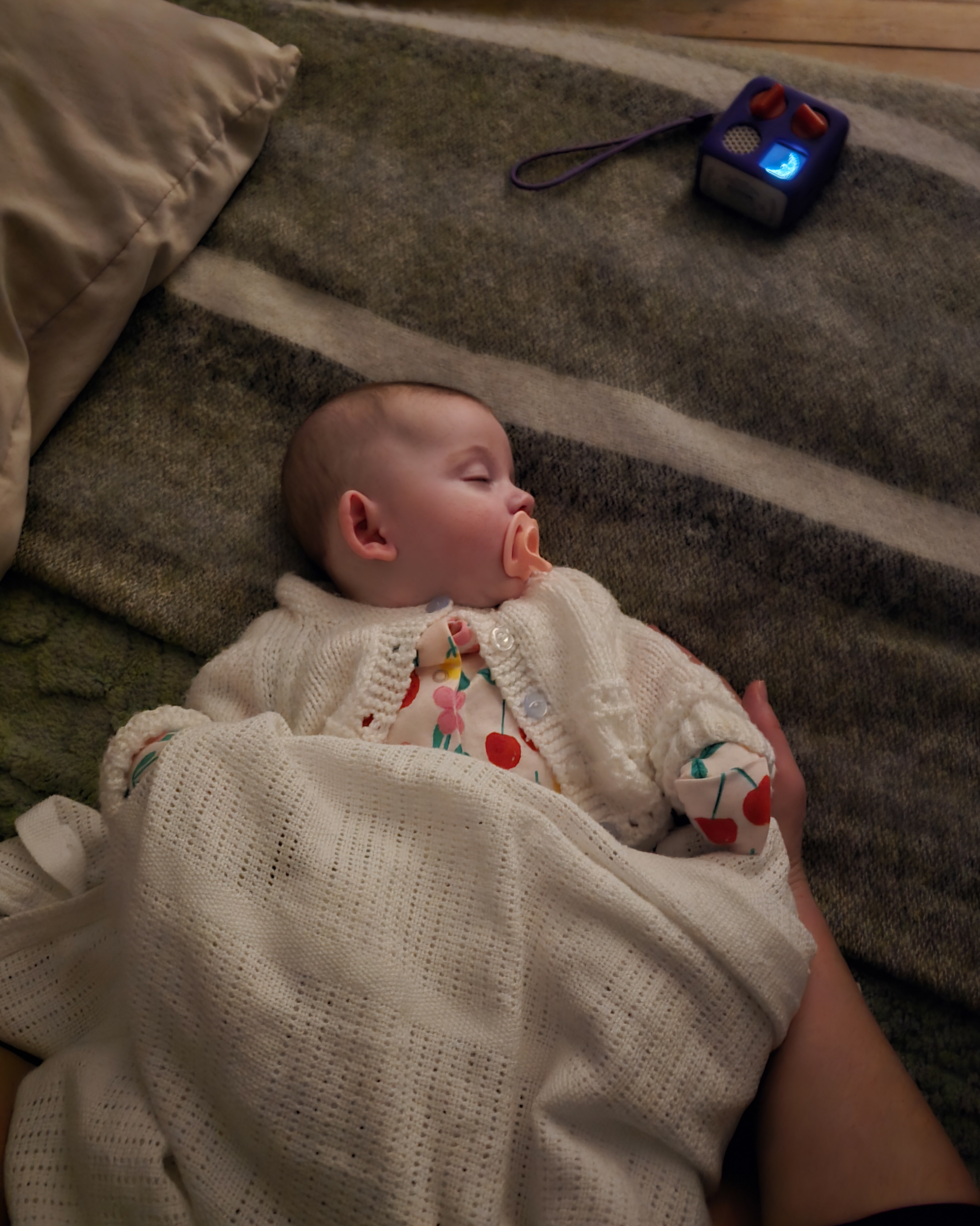
What I loved immediately was how intentional it felt. There’s no screen to catch their attention, no bright visuals or flashing lights – just sound. And sound is something babies respond to instinctively. The rhythm of nursery rhymes, the steadiness of white noise, the softness of instrumental music – it all feels calming rather than stimulating.
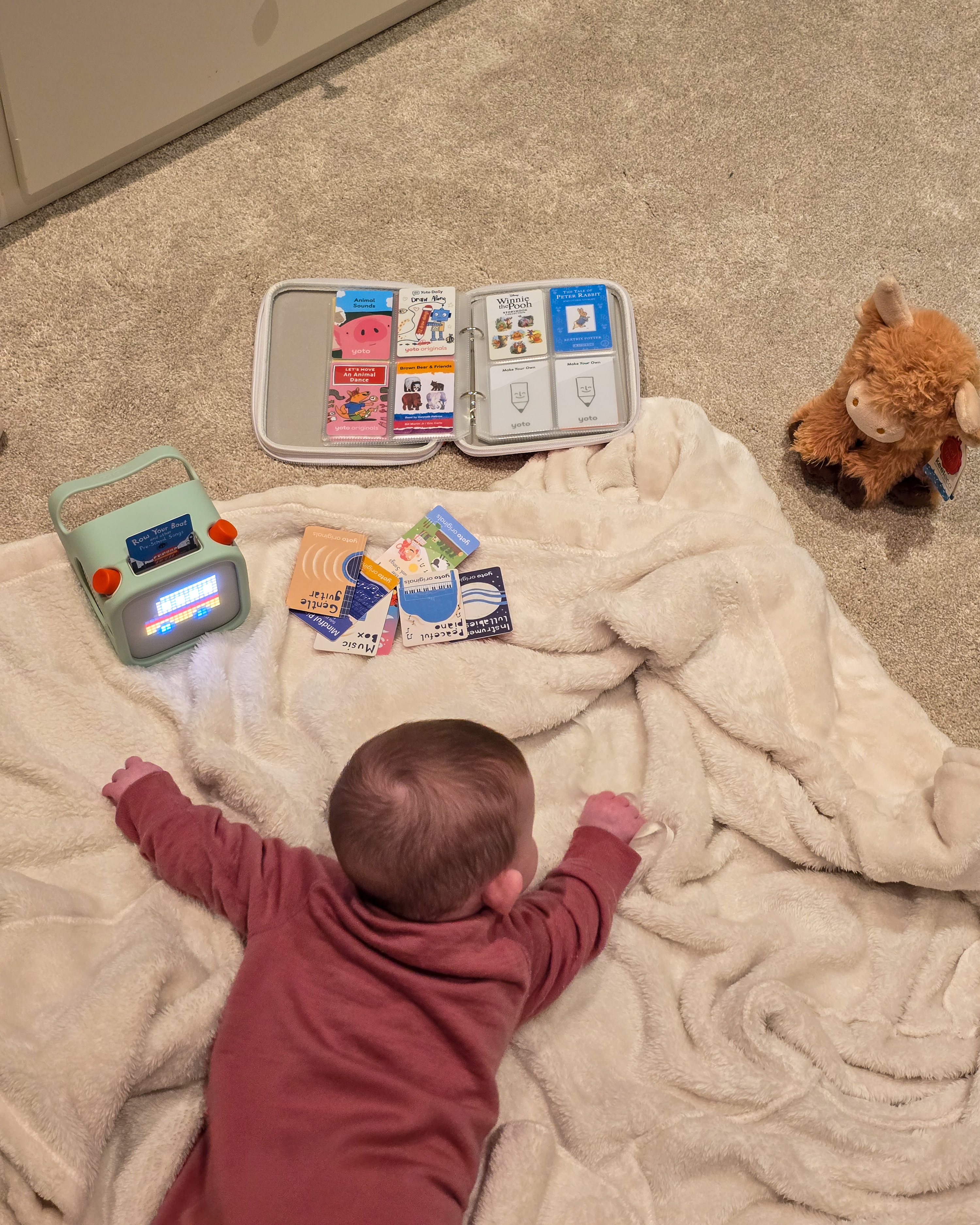
We use a mix of nursery rhyme cards from the 0-2 year old cards range (which she absolutely loves), relaxing piano music, and sleep-focused sounds like campfire audio and white noise. The physical cards make it feel purposeful too, even at this early stage. Choosing one, inserting it, and letting it play has become part of our routine – something I know will only become more meaningful as she grows.
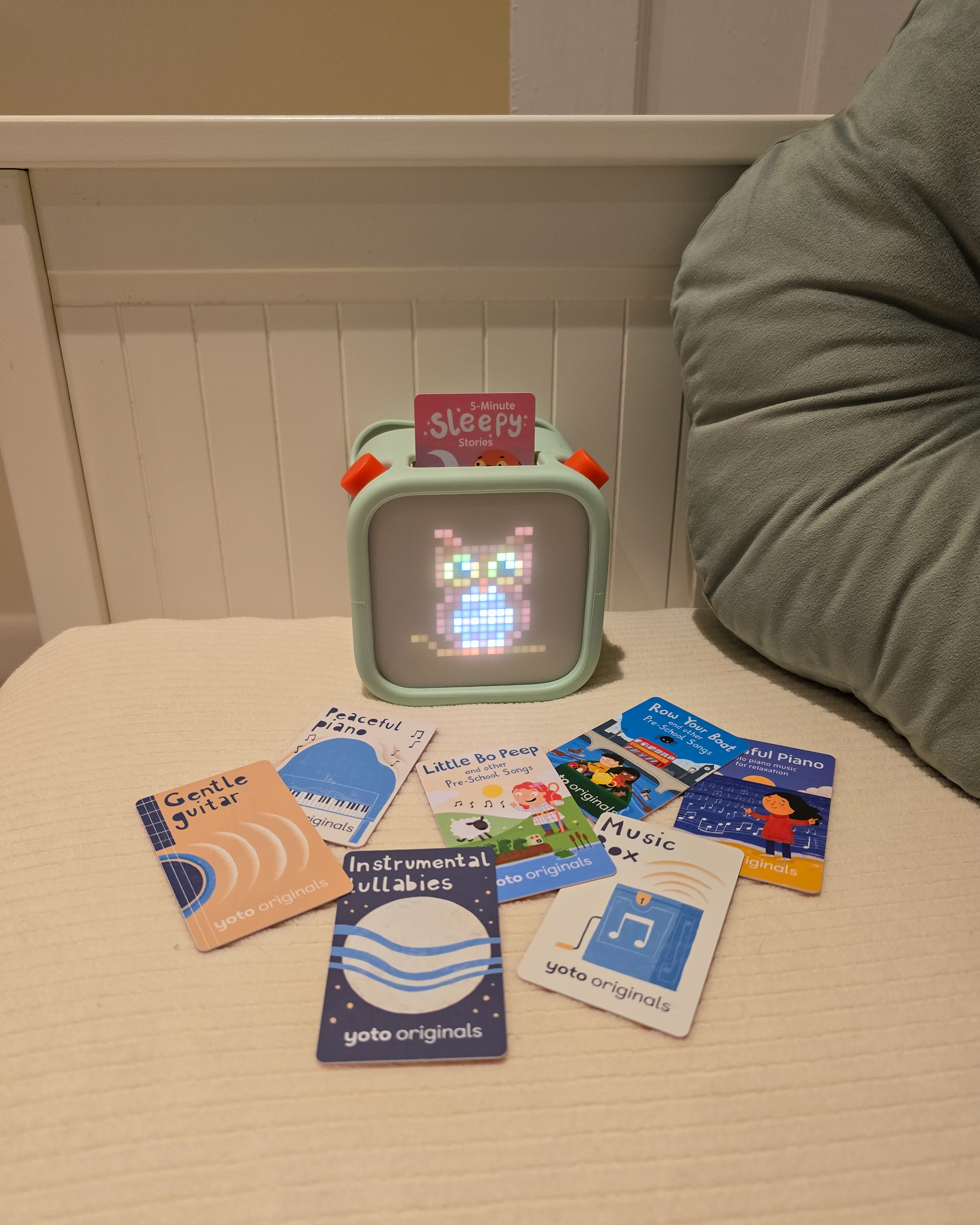
Starting with audio has also made me appreciate how flexible Yoto is. At three months old, it’s a sound machine. In a year or two, it will be a storyteller, then a music player, and eventually something she can use independently. That’s what makes it feel less like a baby product and more like a long-term companion.
Is Yoto Suitable for Babies Under 1?
Although Yoto is often marketed towards older children, we’ve found it works well from around three months when used for white noise, music, and calming audio. There’s no screen and no visual overstimulation – just sound, used intentionally. As with any audio device, we keep the volume low and use it as part of a wider sleep routine.
The Yoto Mini on the Go: Familiar Sounds in Unfamiliar Places
The moment I truly realised how valuable the Yoto Mini was came during our daily walks.
We’d never used white noise in the pram while we’re out and what used to happen was this: as soon as we got home and the background noise disappeared, the sudden quiet would wake her. Our house is very calm, and the contrast was enough to disrupt her sleep.
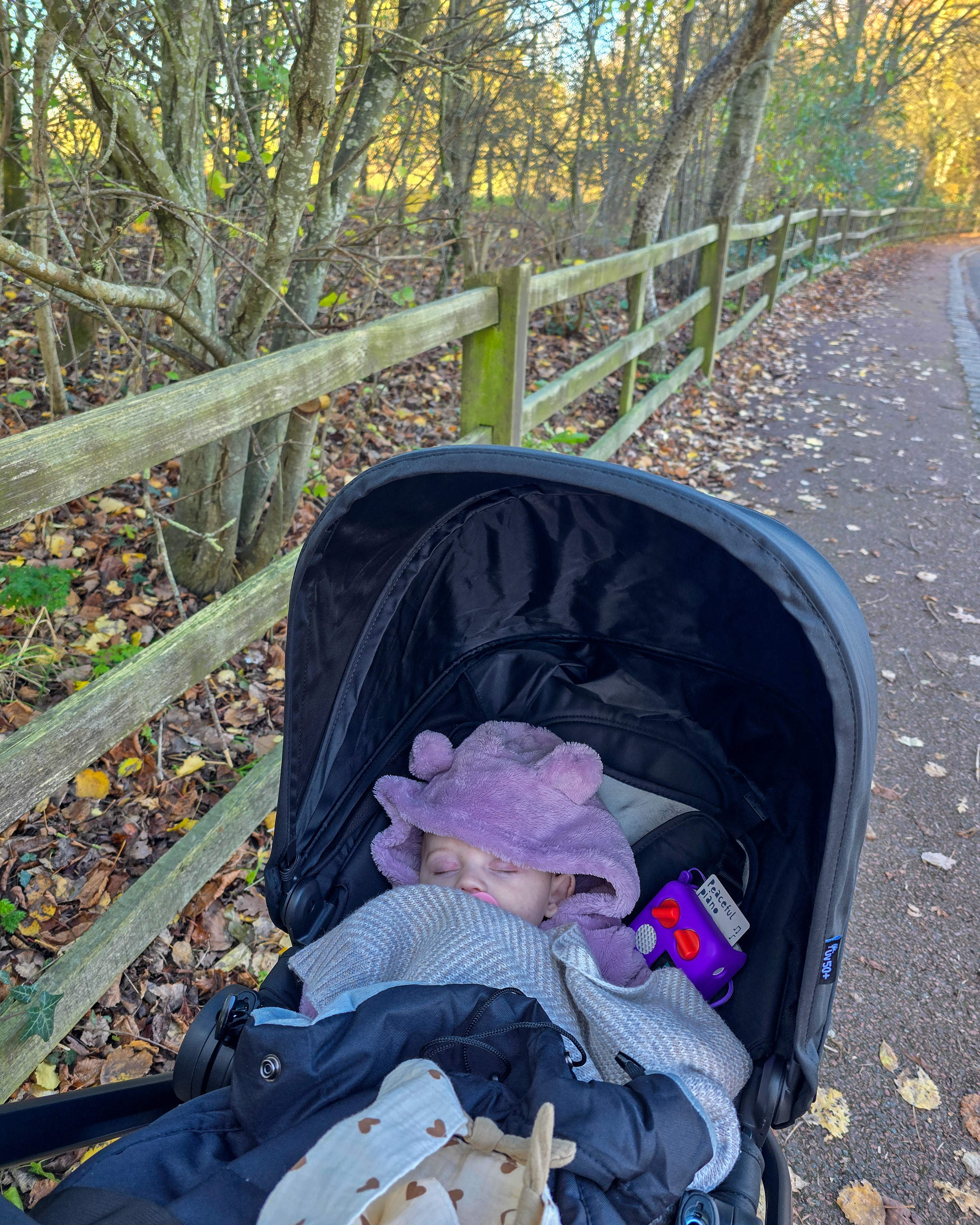
With the Yoto Mini, the sound stays consistent. White noise plays throughout the walk and continues once we’re indoors, creating a seamless transition between environments. That continuity has made a noticeable difference – especially during naps – because there’s no abrupt change for her to react to.
The same thing proved invaluable when we travelled to visit my mum in Bournemouth. It was a completely unfamiliar space, with different sounds, rooms, and routines. Having the Yoto Mini with us meant we could recreate a small sense of home wherever we were. Playing the same familiar sounds helped to soothe her and made settling much easier, even in a strange house.
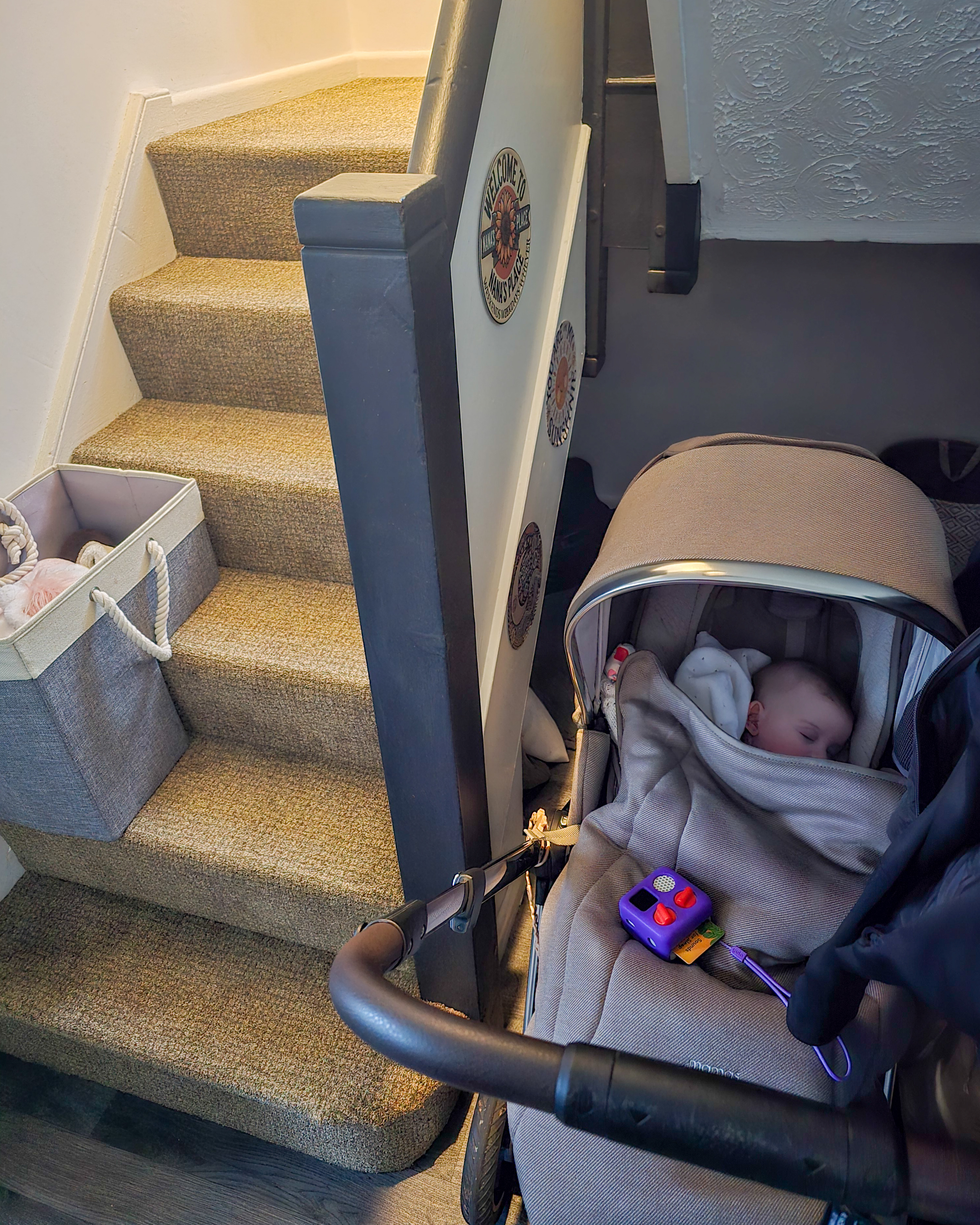
What I love most about the Mini is how effortlessly it fits into life with babies even from 3 months old. It’s small enough to live in the pram, easy to take from room to room, and doesn’t rely on a phone or an app once it’s set up. Whether we’re out for a walk or staying somewhere new, it’s become a quiet constant – something familiar she can rely on, no matter where we are.
At Home: Naps & Bedtime
At home, the Yoto Player has settled into a fixed place in our routine. Unlike the Mini, which moves with us, the Player stays put and is used in predictable moments – daytime naps and bedtime in the evening.

During the day, we use it to play white noise or gentle soundscapes while she naps, whether that’s in the bedroom or on our bed. At night, it’s part of the wind-down before sleep, creating a familiar backdrop as the house quietens. Over time, those sounds have become a cue that it’s time to rest.
What’s worked well is the simplicity. We don’t change it often or overthink it – the same sounds, played in the same way, at roughly the same times. That consistency has made the Yoto Player feel less like a device and more like part of the environment, quietly supporting sleep without drawing attention to itself.
Stories Before They Understand Stories
One of my favourite things about using the Yoto has been introducing stories long before my baby can understand the words.
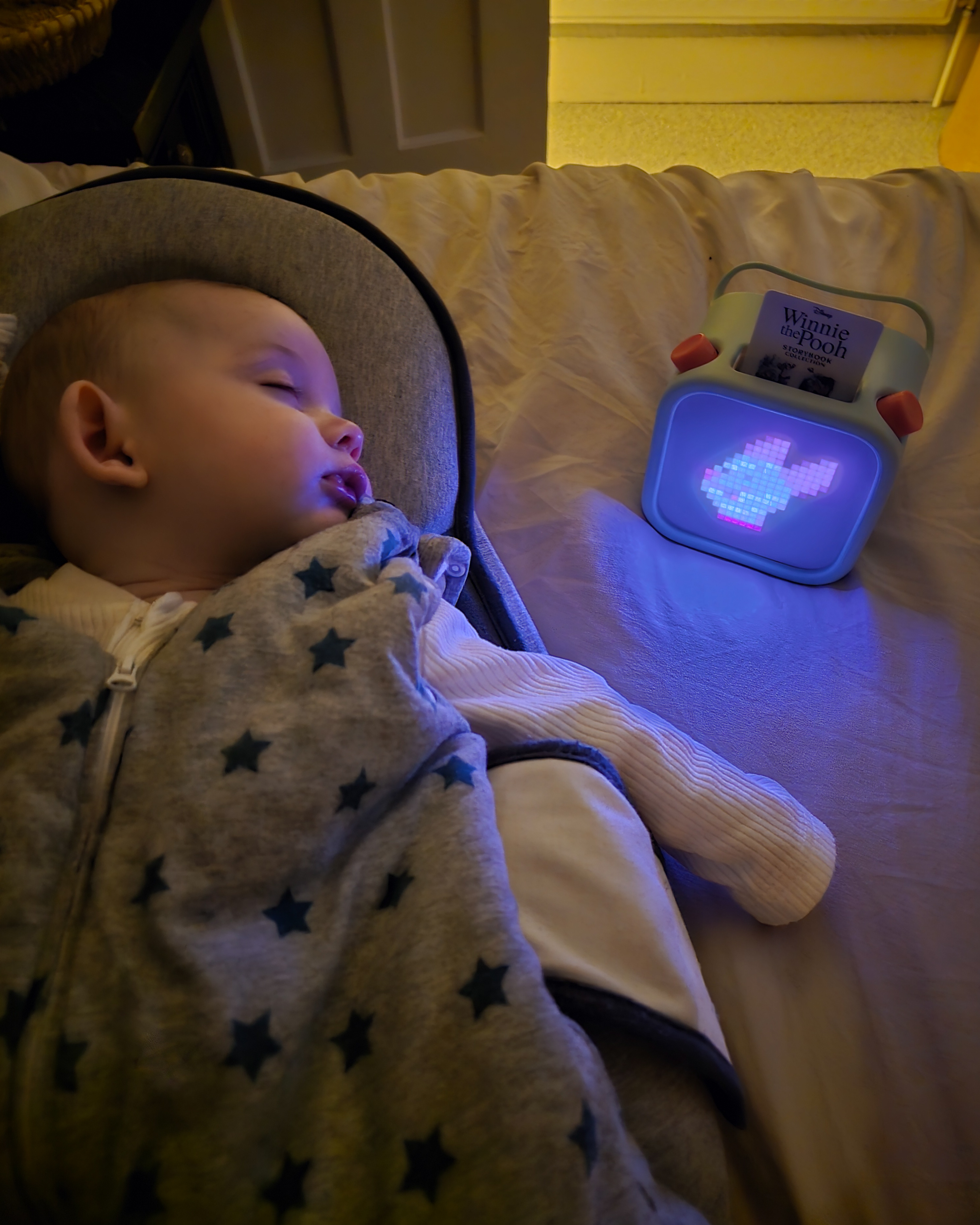
As part of our bedtime routine, we often play Winnie-the-Pooh. Although the card is recommended for older children, she absolutely loves it. Not for the story itself, of course, but for the gentle voice, the rhythm of the narration, and the sense of calm it brings to the room. There’s something incredibly soothing about familiar stories being read aloud, even when they’re only half-heard.
Peter Rabbit has been another unexpected favourite. She loves the intro music on the TV series, so for Christmas I bought her a Peter Rabbit plush and the The Tale of Peter Rabbit Yoto card. There’s something really special about pairing a physical comfort object with an audio story – it feels like the beginning of a connection she’ll carry with her as she grows.
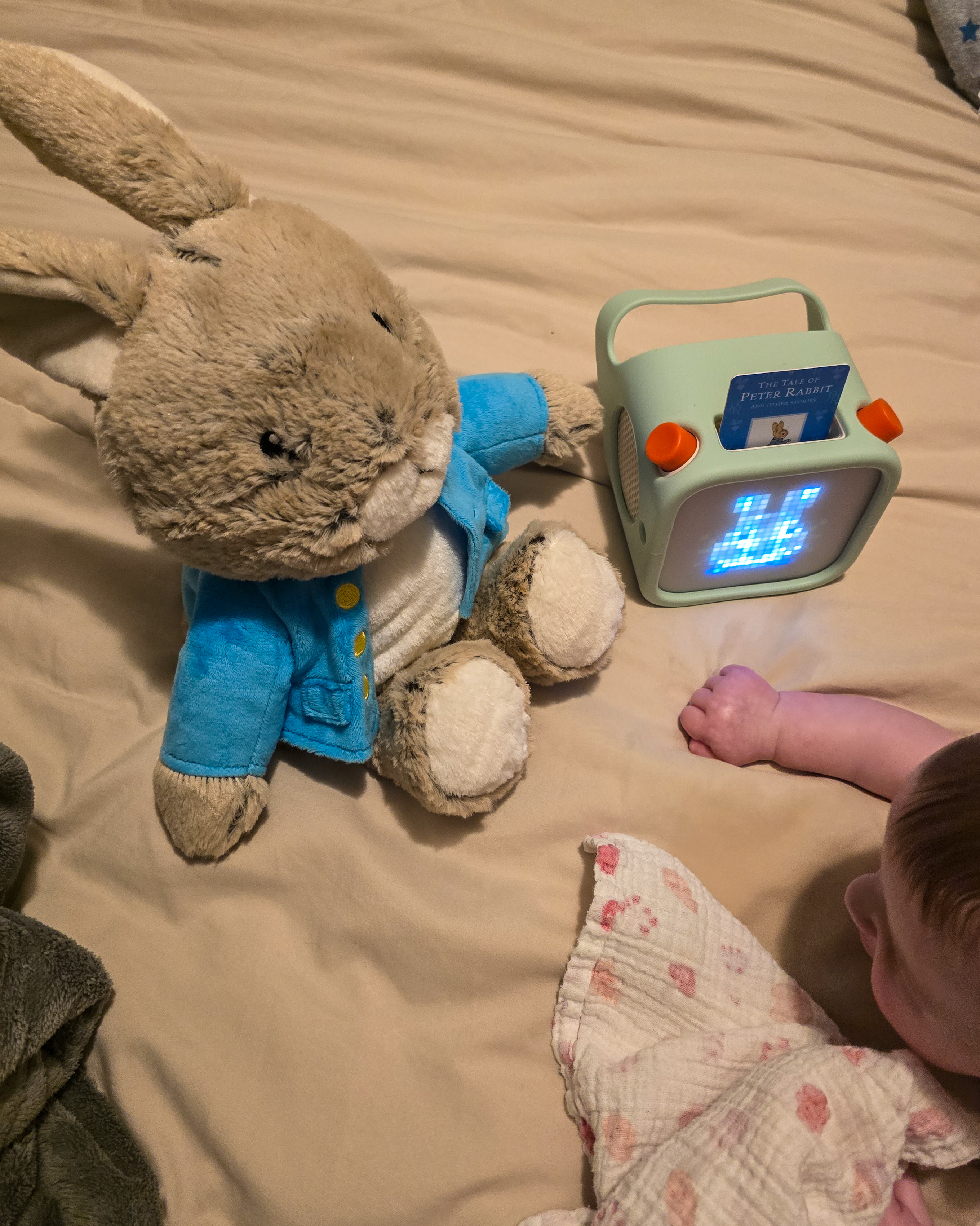
These moments have made me realise that using Yoto at this stage isn’t about rushing her into stories too soon. It’s about building positive associations with listening, books, and calm time together. Long before she can follow a plot, she’s learning that stories are safe, soothing, and part of winding down – and that feels like a lovely place to start.
Yoto Mini vs Yoto Player: What We Use Each One For
Having both the Yoto Mini and the Yoto Player has made sense for us because they naturally serve different roles.
The Yoto Mini is our go-to when we’re out and about. It lives in the pram, comes with us when we travel, or on our weekend hikes, and is the one I reach for when we’re moving between spaces. Its size and portability make it ideal for white noise on walks, naps on the go, and recreating familiar sounds in unfamiliar places. It’s the most flexible option and the one we probably use in the widest range of situations.
The Yoto Player, on the other hand, has become our home base. We use it for naps during the day and as part of our bedtime routine. It feels more settled – something that stays in place and signals rest and wind-down time.
Rather than choosing one over the other, we’ve found they complement each other. The Mini handles movement and change; the Player brings consistency and calm at home. Together, they cover both sides of life with a baby.
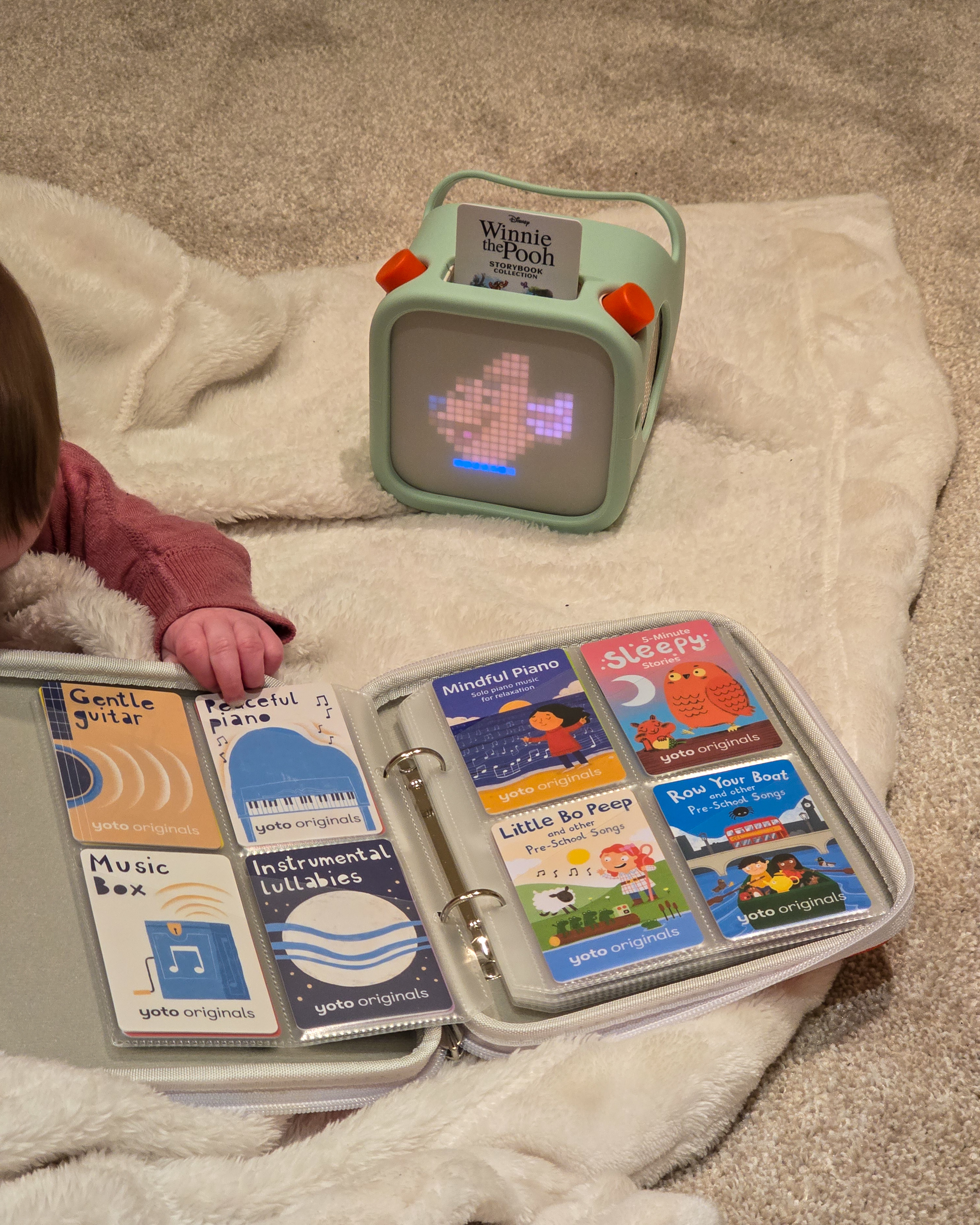
In short: we use the Mini for movement and travel, and the Player for sleep and routine at home. If I had to choose one, it would be the Yoto Mini as we travel a lot.
Is Yoto worth it?
For us, Yoto has become more than just a toy. From white noise in the pram to music and stories at home, it’s replaced several separate products – a white noise machine, a music player, and eventually a story device – which makes it feel like a genuinely worthwhile investment, even from a very early age.
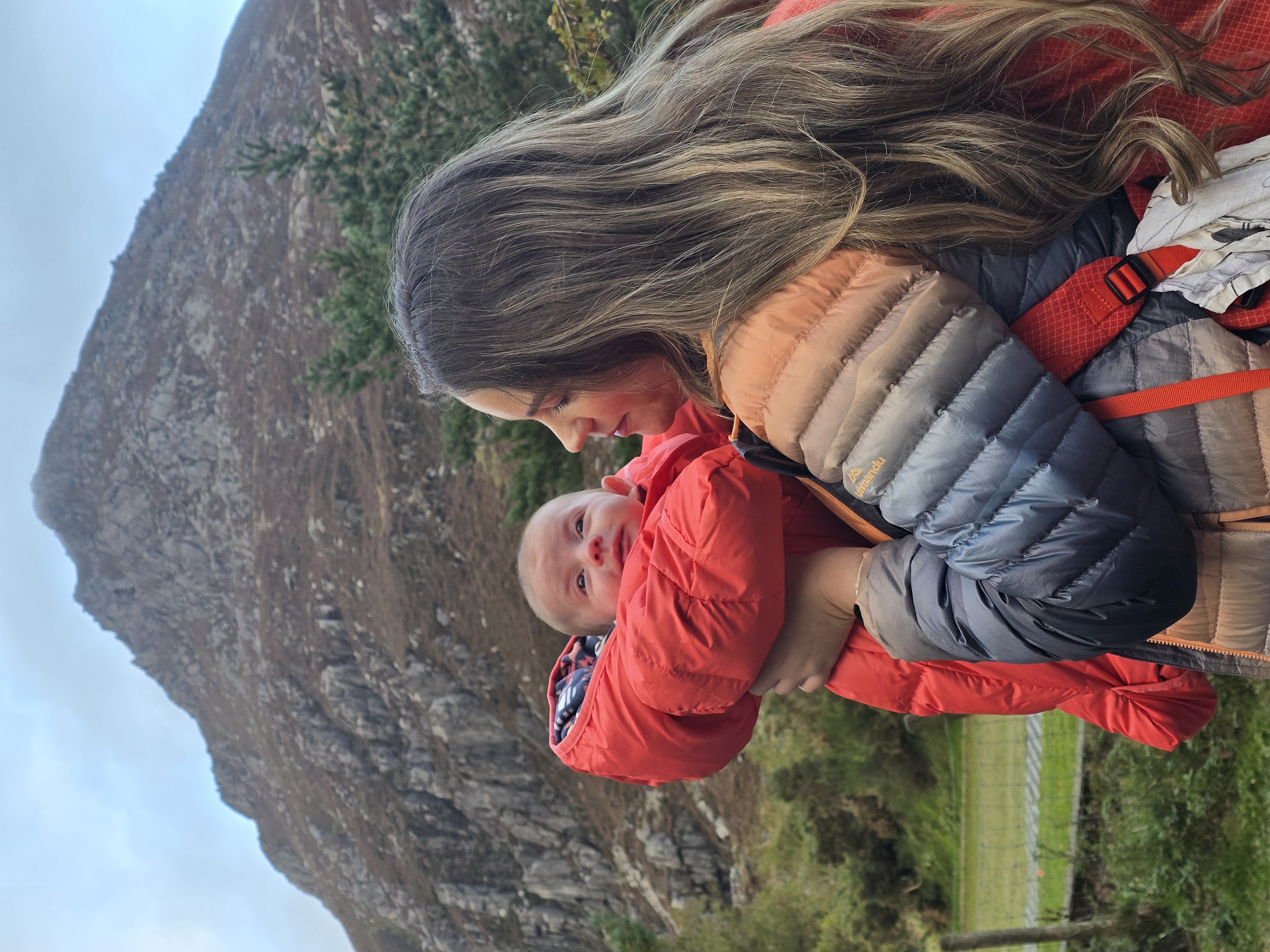
Outdoor Adventure, Travel, and Family Editor.
I share stories from my adventures with my daughter, Daisy, practical gear advice, and tips for navigating family life from my experiences.
Follow Sam’s adventures on Instagram @sams_adventures_

