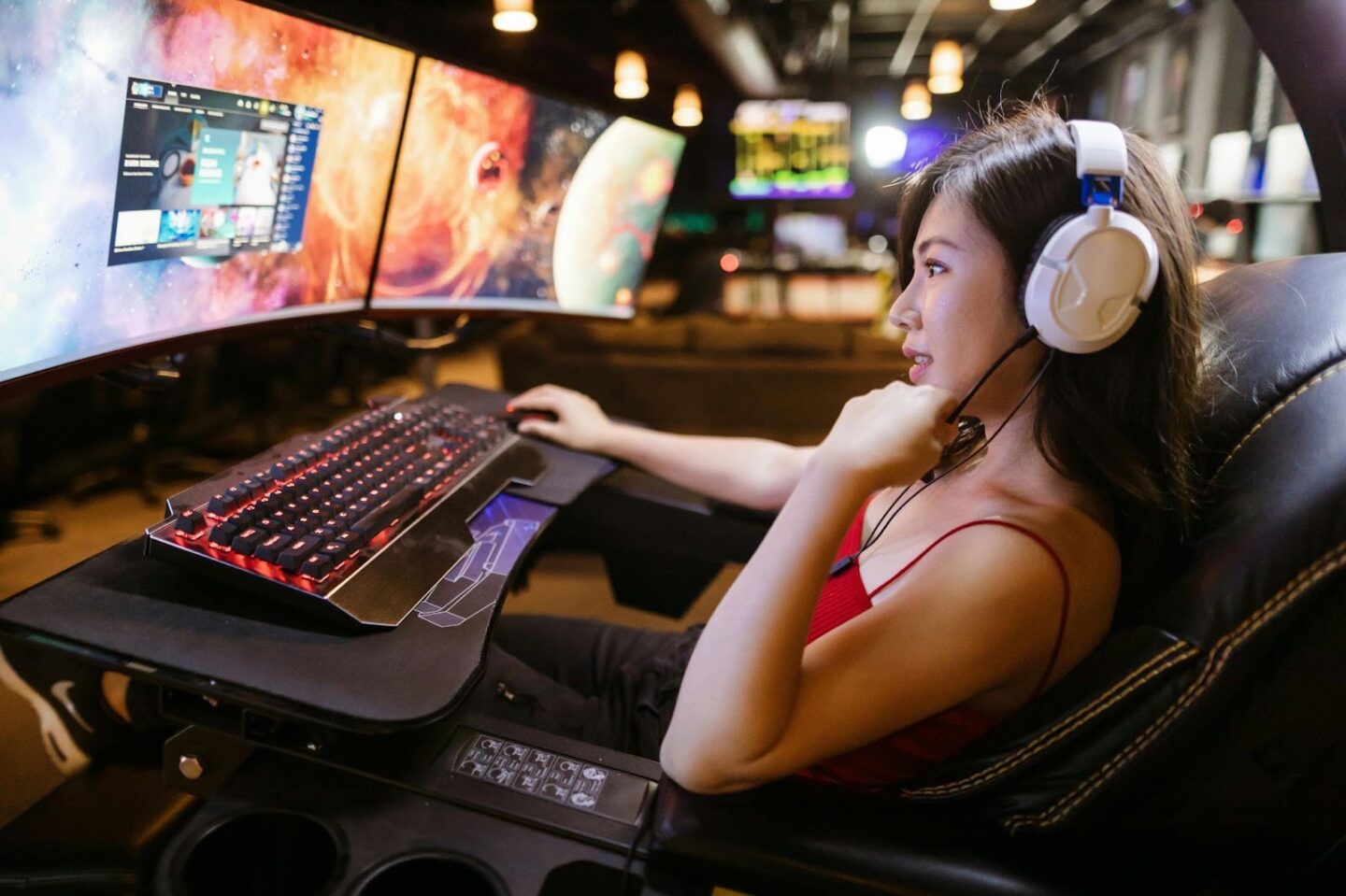
For years, the narrative around women in gaming felt more like a survival guide. Several discussions centred on “the mute button” more than the actual games being played. That changed significantly, and the conversation moved from dodging toxicity to where women are building their own online gaming safe spaces. With women now making up nearly half of the global gaming population, female players are reinventing what it means to be social in a virtual space.
The Growth of the “Silent” Player
The history of women in multiplayer lobbies can often be summarised by a single, frustrating tactic: silence. For years, “gender masking” wasn’t just a choice; it was a shield. This meant choosing usernames like “ShadowPlayer” instead of “Sarah,” or keeping the headset unplugged to avoid the inevitable explosion of harassment that often follows the sound of a female voice. It was a functional way to play, sure, but it turned a social hobby into an isolating, solo experience.
Fast forward to now, and that defensive crouch is starting to disappear. The “Silent Player” is becoming a relic of the past as the presence of women in high-stakes competitive gaming becomes a normalised standard rather than a revelation. This change is backed by a massive demographic weight. Globally, female gamers now number between 1.5 and 1.7 billion, making up roughly 45% to 48% of the world’s 3.5 billion gamers. This has been largely driven by mobile and casual gaming, which has turned almost every smartphone into a social hub.
This influence goes much further than traditional consoles. In online casinos, for example, women now account for 30-40% of the roughly 100 million players worldwide. That translates to 30 to 40 million participants who are increasingly prioritising slots with social features over solitary poker rooms. Even in the broader world of cryptocurrency, women now make up 26-39% of the global crypto user base, roughly 130-234 million owners. In the US, at least 34% of female gamers are actively using crypto. In Europe, including UK crypto casino gaming and blockchain-based platforms, roughly 14% of female gamers are participating in everything from online slots and poker to blockchain-based RPGs and MMOs.
This transition hasn’t happened because the internet suddenly developed a conscience; it happened because gamers stopped waiting for the environment to change and started changing the dynamic themselves.
Moving from Public Lobbies to Private Circles
The real social heart of gaming today isn’t happening in the game’s actual lobby; it’s happening on Discord. But it’s not the massive, 50,000-member servers where the chat moves so fast you can’t even read it. Those places are usually just as chaotic as a public lobby. Instead, the real connections are happening in “micro-communities.”
Think of these as digital living rooms. They are vetted, often invite-only spaces where a “vibe check” is the only thing that matters. Specialised online communities have made it way easier to find a “five-stack” for a Sunday night session based on who you actually get along with, rather than just who is the highest rank. There is a huge sense of relief in joining a voice call where you don’t have to brace yourself for a nasty comment the second you speak. These private circles have turned gaming from a high-stress gamble into what it’s supposed to be, which is a way to actually hang out and relax.
The “Cosy” Effect and Collaborative Play
While competitive games like Valorant get all the hype, a much quieter social scene has taken over the “cosy” gaming world. Games like Palia and Animal Crossing have completely changed what multiplayer looks like. In these worlds, you aren’t worried about your “kill-death ratio.” Instead, you’re helping a neighbour harvest crops or showing off a digital house you spent ten hours decorating.
This “Cosy Effect” has created a third place, that social spot between work and home, where you can just exist without any pressure. It’s common now to see groups hosting virtual “coffee dates” or fashion shows. It’s collaborative, creative, and actually kind. In 2026, these games have proven that you don’t need a high-stress environment to build a high-quality community.
Streamers as the New Community Architects
If you look at the top streamers today, people like Pokimane or Valkyrae, their influence is about more than just how well they play. They are essentially running huge, moderated social clubs. When a streamer sets a zero-tolerance rule for toxicity, their entire audience follows suit.
Following a specific streamer has become a shortcut for finding your own tribe. If you like a creator’s energy and their chat is friendly, you’ve basically found a pre-vetted group of people to play with. You know that the people in that chat share your values and your sense of humour. It takes the guesswork out of finding friends online.
The Rise of Niche Identity Spaces
One of the best trends in 2026 is that the “gamer” identity isn’t one-size-fits-all anymore. We’ve moved past the idea that all women gamers want the same things. Now, there are specific hubs for everyone: “Gamer Moms” who play Diablo after the kids go to bed, “Silver Gamers” who have been playing since the 80s, and safe spaces for LGBTQ+ players.
This move toward smaller, niche groups means you aren’t just connecting over a game; you’re connecting over your actual life. You don’t have to prove you’re a “real gamer” to belong. Whether it’s a late-night session or a casual weekend tournament, the focus is on the human stories behind the avatars.
Where Do We Go From Here?
The word “gamer” is finally losing its baggage. It’s becoming a universal language rather than a club you have to fight to get into. For women, especially, the social side of this world went from being a place of exclusion to a place of endless, curated possibilities.
The community is no longer just participating; it is also hosting gaming spaces. By building their own servers, setting their own rules, and creating spaces where they can be themselves, women have essentially changed the narrative and made gaming an inclusive space for everyone.

Just a group of real women dealing with life’s daily struggles! Want to write for us? Email: hello@thedailystruggle.co.uk

