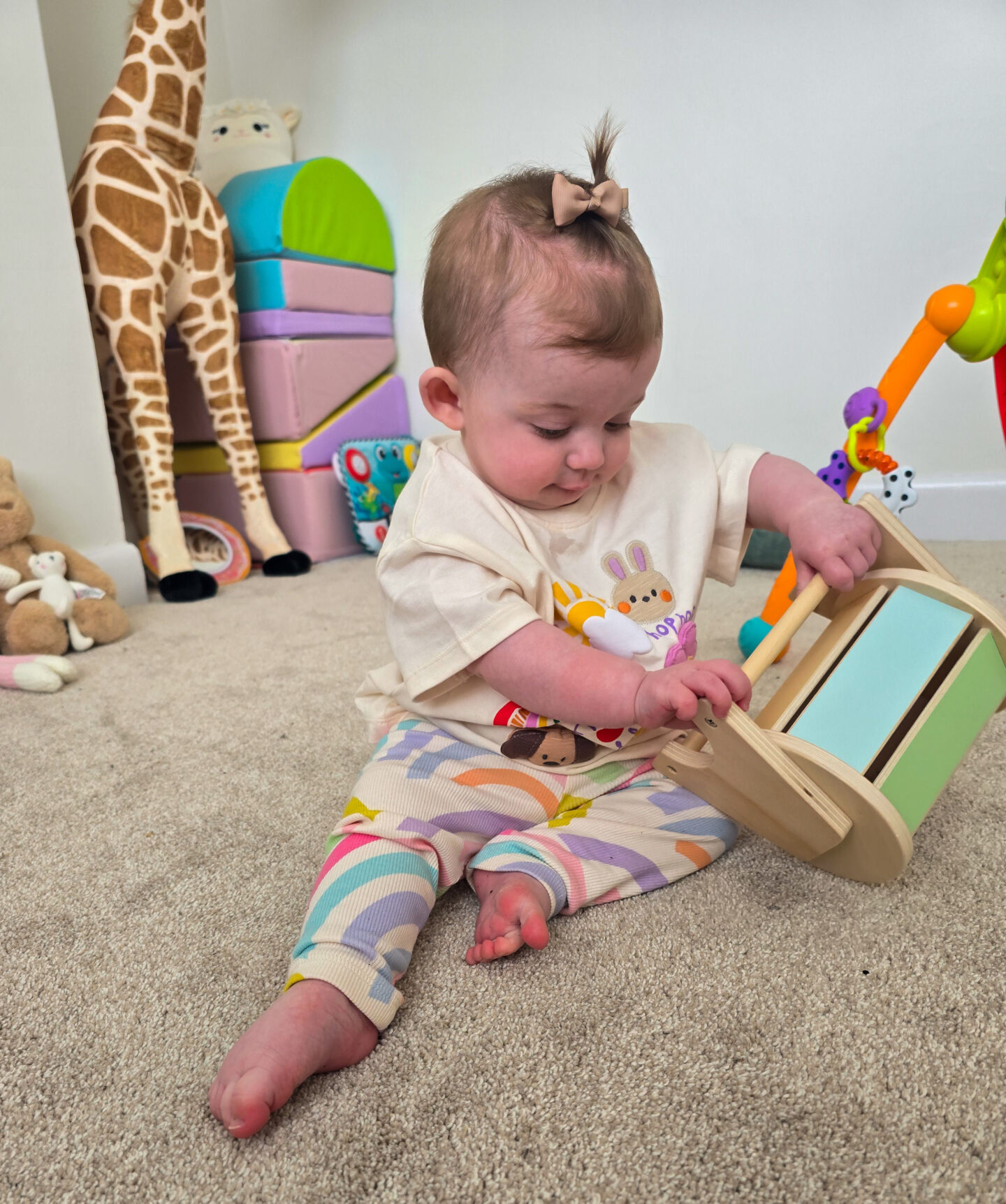
When I was pregnant, I assumed babies needed lots of toys. Now I’m 10 months into motherhood, I’ve realised that’s not really true. Between 6 and 12 months, Daisy’s play changed dramatically. At 6 months, she was obsessed with anything that made a noise. Maracas, toy drums, crinkly books and mirrors were instant hits, while stacking cups and baskets she could empty kept her entertained for ages. If you’re shopping for a younger baby, you might also find our guide to the best toys for 0–6 month olds helpful.
By 9 or 10 months, her interests had shifted again. Suddenly she was fascinated by stacking cups, posting objects into containers, putting balls into holes and banging random household items together just to see what noise they made.
She still loves most of her toys, but she’ll happily spend just as long playing with a wooden spoon, silicone spatula or empty wipes packet. If there’s one thing I’ve learned, it’s that keeping things simple goes a long way. The toys we’ve got the most from are usually the ones that can change with her, rather than having one specific way to play.
What toys are best for a 6 month old?
At 6 months, simple toys that encourage reaching, grasping, sensory exploration and cause-and-effect tend to have the most staying power. Activity toys, stacking toys, balls, teethers and toys that can later support sitting, crawling or early movement are all useful options.
These are the toys we’ve genuinely used and enjoyed during the second half of Daisy’s first year.
Toys That Encourage Fine Motor Skills
Around 8 months old, I noticed Daisy becoming much more interested in picking things up, moving them between hands and figuring out how objects fit together.
Simple toys that encouraged these movements quickly became favourites.
Wooden Stacking Toy Bear
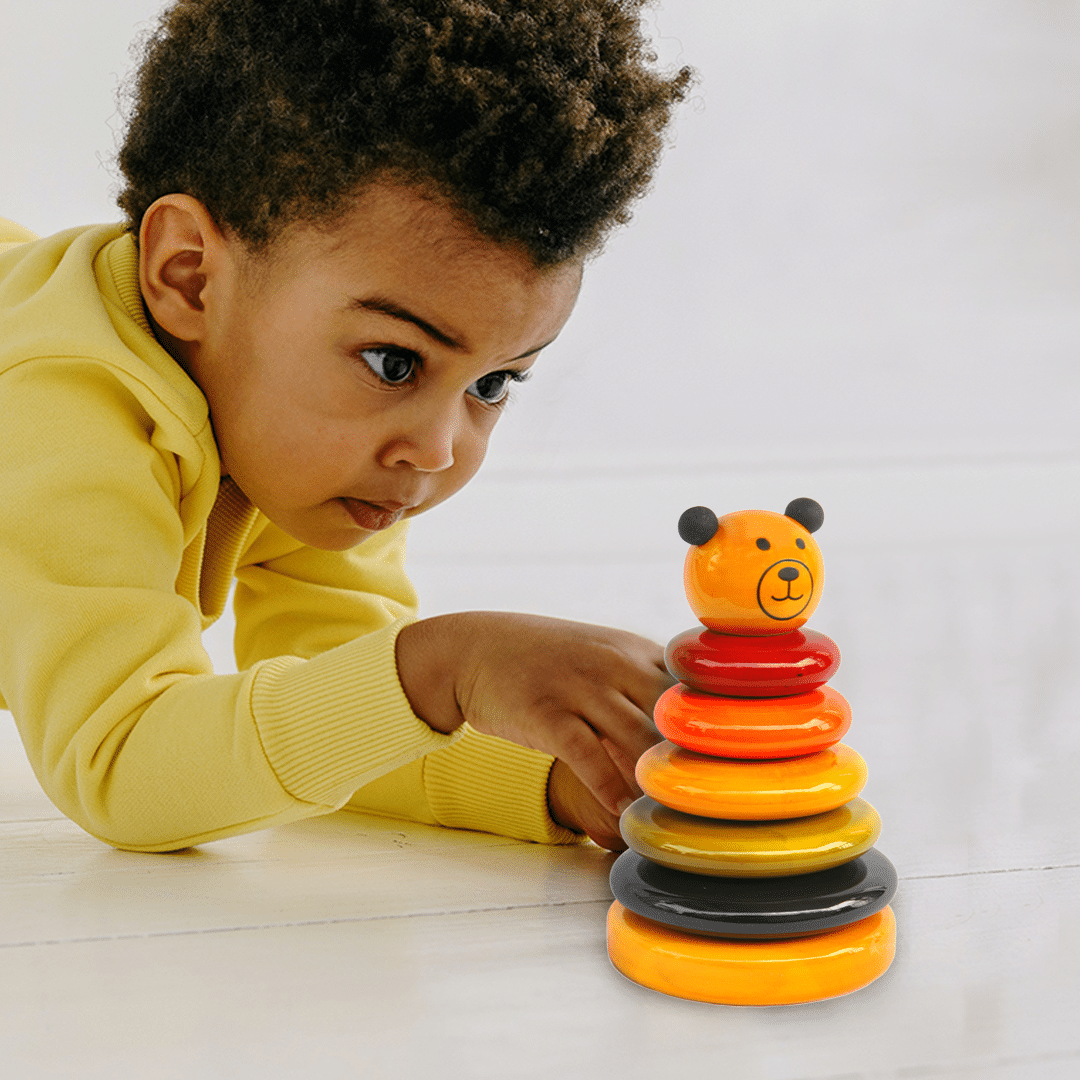
One toy that has seen a surprising amount of use is the Wooden Stacking Toy Bear. Handcrafted from sustainably sourced wood, the bear is coloured using natural plant-based dyes rather than paint or varnish. The colours are created using a traditional lacware technique, giving each piece a beautiful natural finish while allowing the wood grain to remain visible.
Although it’s recommended for children aged one and over, Daisy started enjoying this toy from around 8 months under close supervision.
At first, she wasn’t interested in stacking at all. Instead, she loved examining the individual pieces, knocking them together and dropping them onto the floor to see what would happen. As she’s got older, she’s started removing the rings herself and attempting to place them back onto the pole.
What I love most about this toy is its simplicity. There are no flashing lights, batteries or buttons. It’s beautifully made, encourages open-ended play and feels like the sort of toy that will stay in our home long after the baby stage has passed.
Why we keep reaching for it
- Encourages hand-eye coordination
- Supports fine motor development
- Open-ended enough to grow with your child
- Made from natural materials and dyes
Toys That Grow With Your Baby
One thing I’ve become increasingly conscious of is buying toys that can be used in different ways as babies develop.
The toys that seem to stay in rotation longest are usually the ones that evolve alongside them.
Pink Wooden Baby Walker with Colourful Blocks
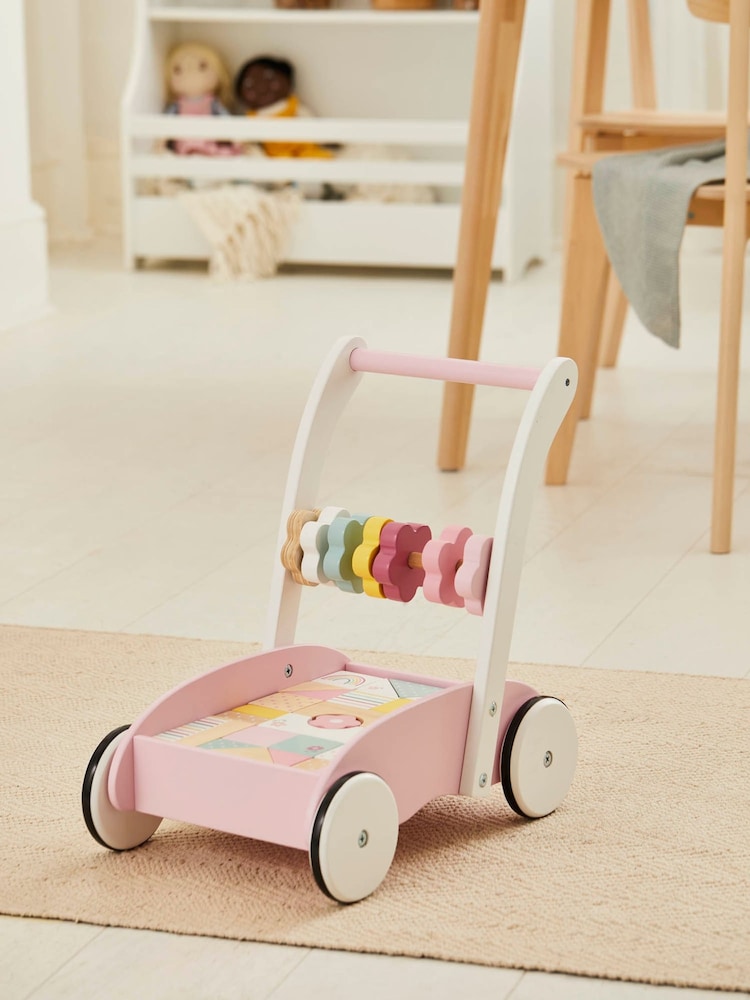
The Pink Wooden Baby Walker with Colourful Blocks has become one of those toys for us.
Long before Daisy was interested in using it as a walker, she was completely captivated by the blocks.
For weeks, her favourite game involved removing every single block, scattering them around the living room and then attempting to put them back. Sometimes she’d stack them. Sometimes she’d bang them together. Sometimes she’d simply carry them from one side of the room to the other.
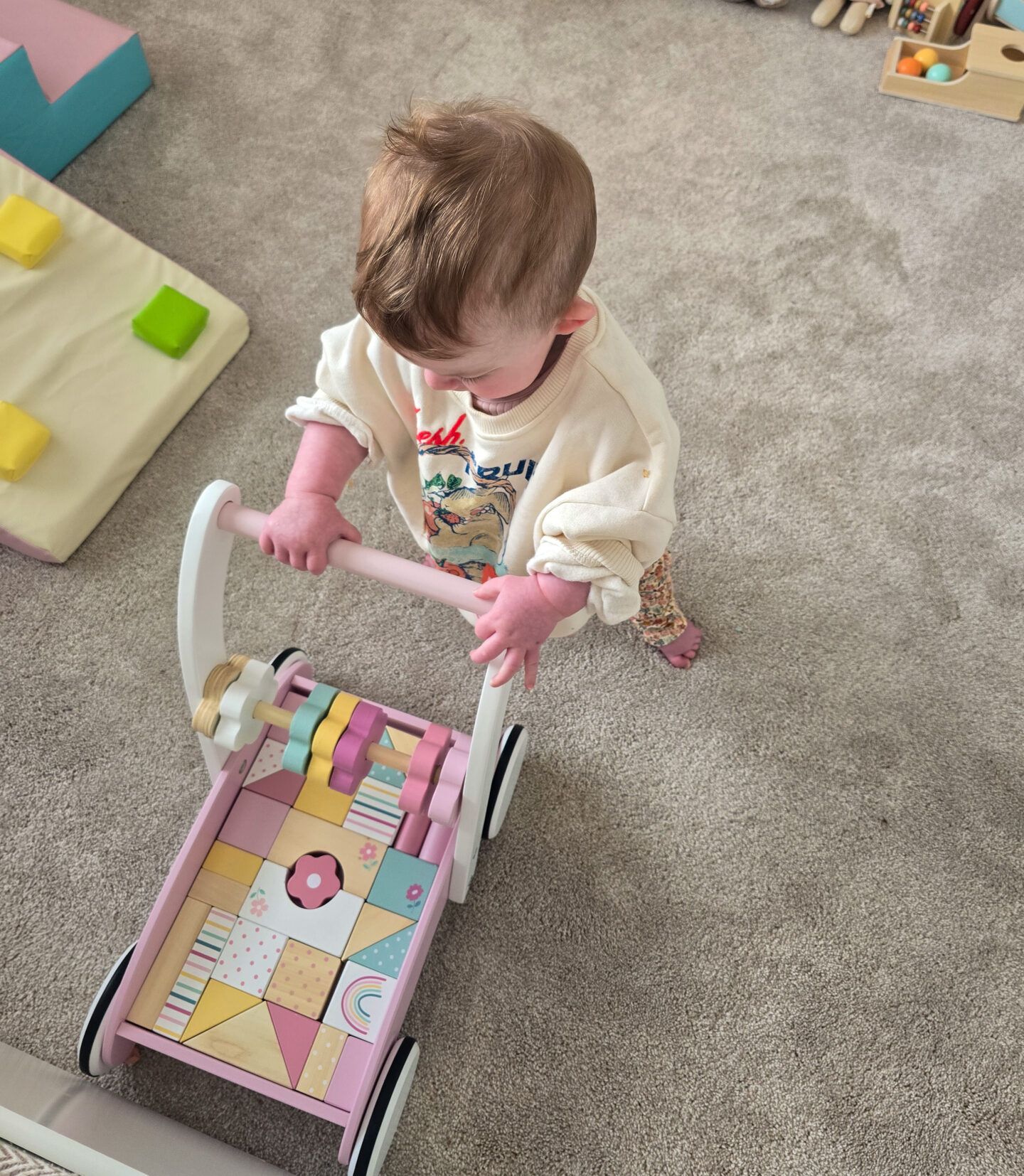
The blocks alone have provided endless entertainment, but it’s nice knowing the walker itself will become more useful as she gains confidence on her feet.
Why we keep reaching for it
- Multiple ways to play
- Encourages independent exploration
- Supports different stages of development
- The blocks can be used separately from the walker
Other Toys We’ve Used Again and Again
Not every favourite toy in our house has been expensive or complicated. In fact, some of the toys Daisy returns to most often are the ones that allow her to explore, experiment and repeat the same activity over and over again.
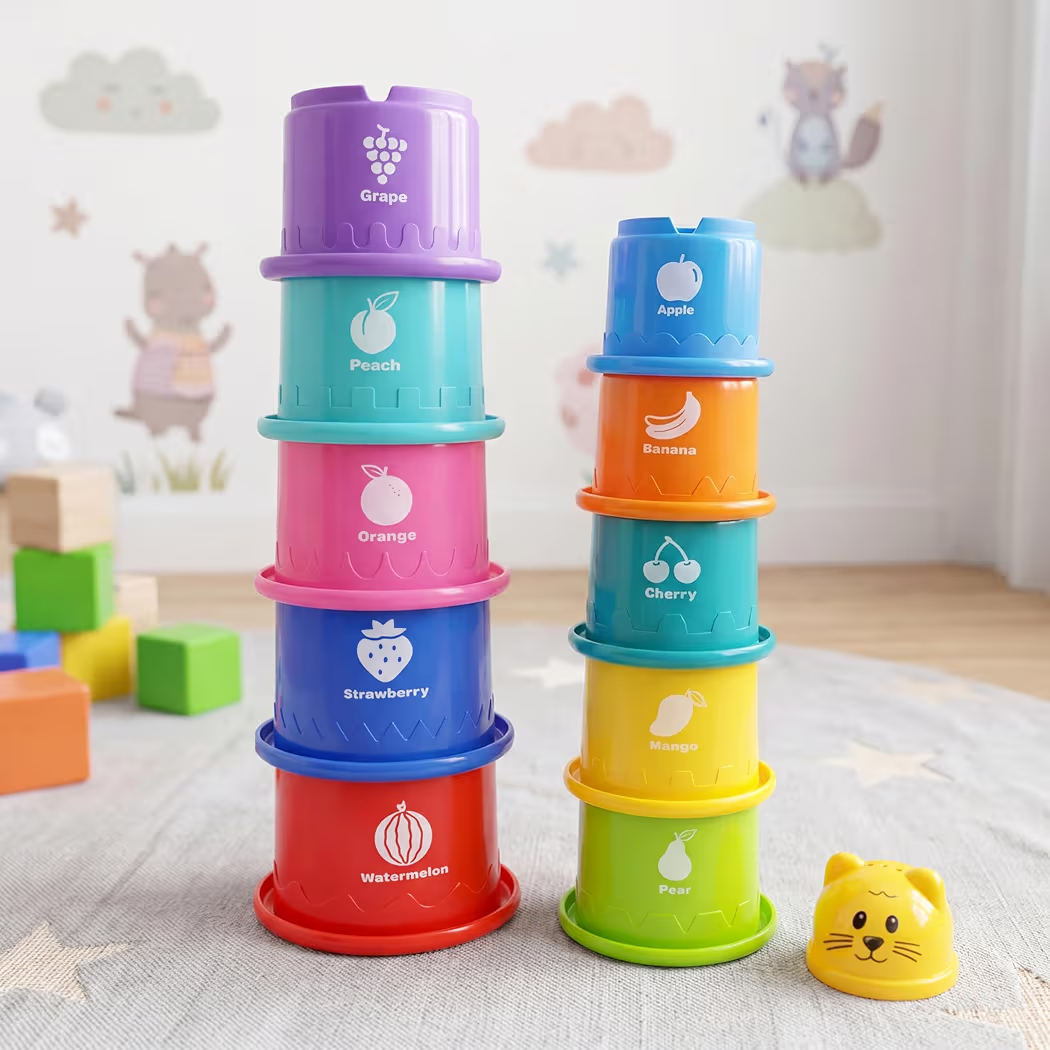
Stacking Cups
If I had to recommend just one inexpensive toy for this age group, stacking cups would probably be it.They’ve been used for stacking, knocking down, nesting, chewing, bath time play and even hiding other toys inside. Few toys have earned their place in our house quite like these.
Musical Instruments
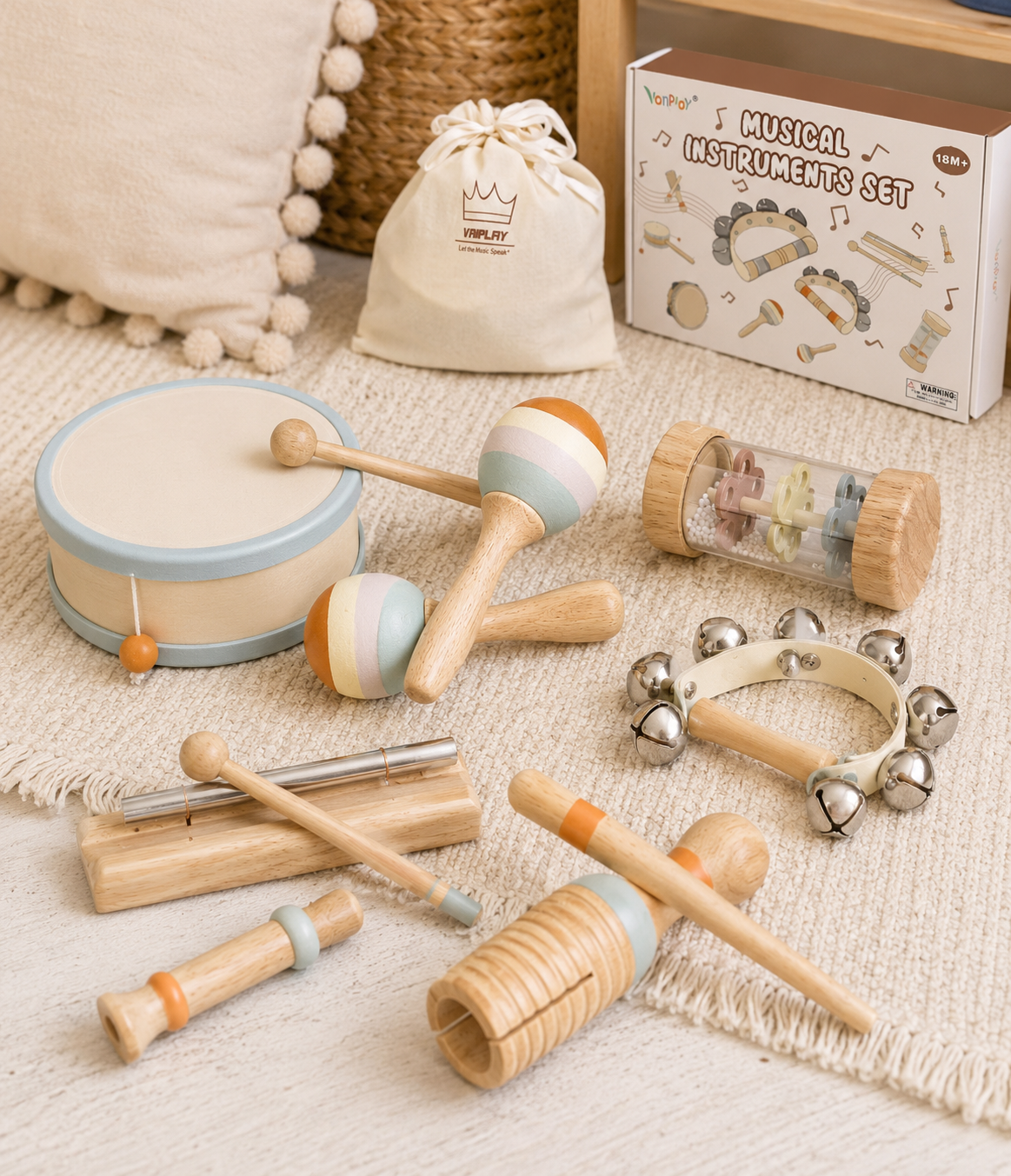
Between 6 and 8 months, musical toys were some of Daisy’s most-used toys. Maracas, toy drums and shaker toys were played with daily, and she seemed fascinated by the connection between her actions and the sounds they made. Even now, she still enjoys banging, shaking and exploring different noises, making musical toys a great way to encourage sensory play, coordination and an understanding of cause and effect.
Books
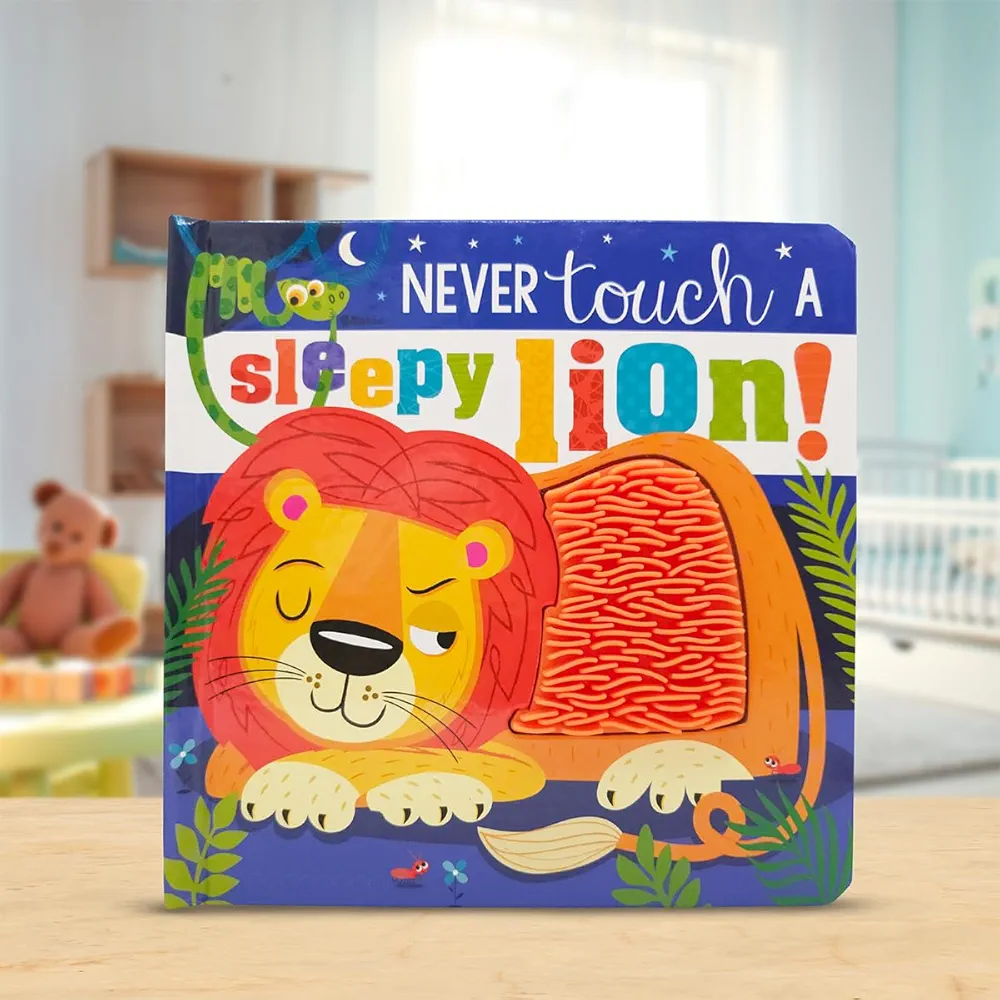
Books have been a constant favourite throughout Daisy’s first year. While she initially enjoyed looking at the pictures and listening to our voices, she’s become much more interactive as she’s grown older. Lift-the-flap books are particularly popular at the moment, and she loves exploring different textures in touch-and-feel books. They’re also one of our favourite ways to slow down and spend some quiet time together during a busy day.
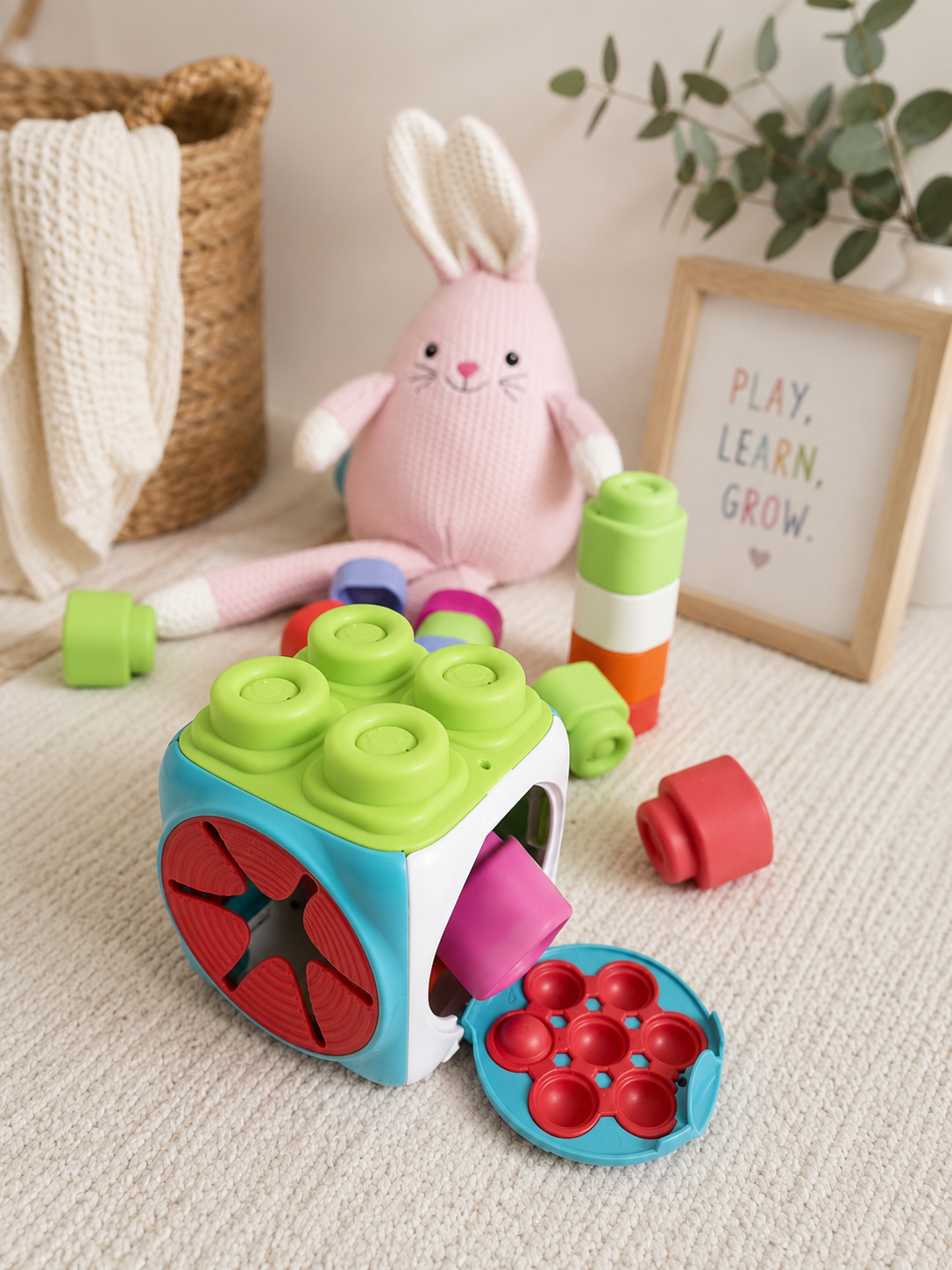
Clementoni Soft Clemmy Sensory Activity Cube
This has been a surprisingly versatile toy throughout the second half of Daisy’s first year. The soft blocks are easy for little hands to grip, squeeze and stack, while the different textures encourage sensory exploration. At first, she mostly enjoyed chewing the blocks and taking them in and out of the cube. More recently, she’s started experimenting with stacking and fitting them through the different openings. It’s one of those toys that seems to grow with them as their coordination improves.
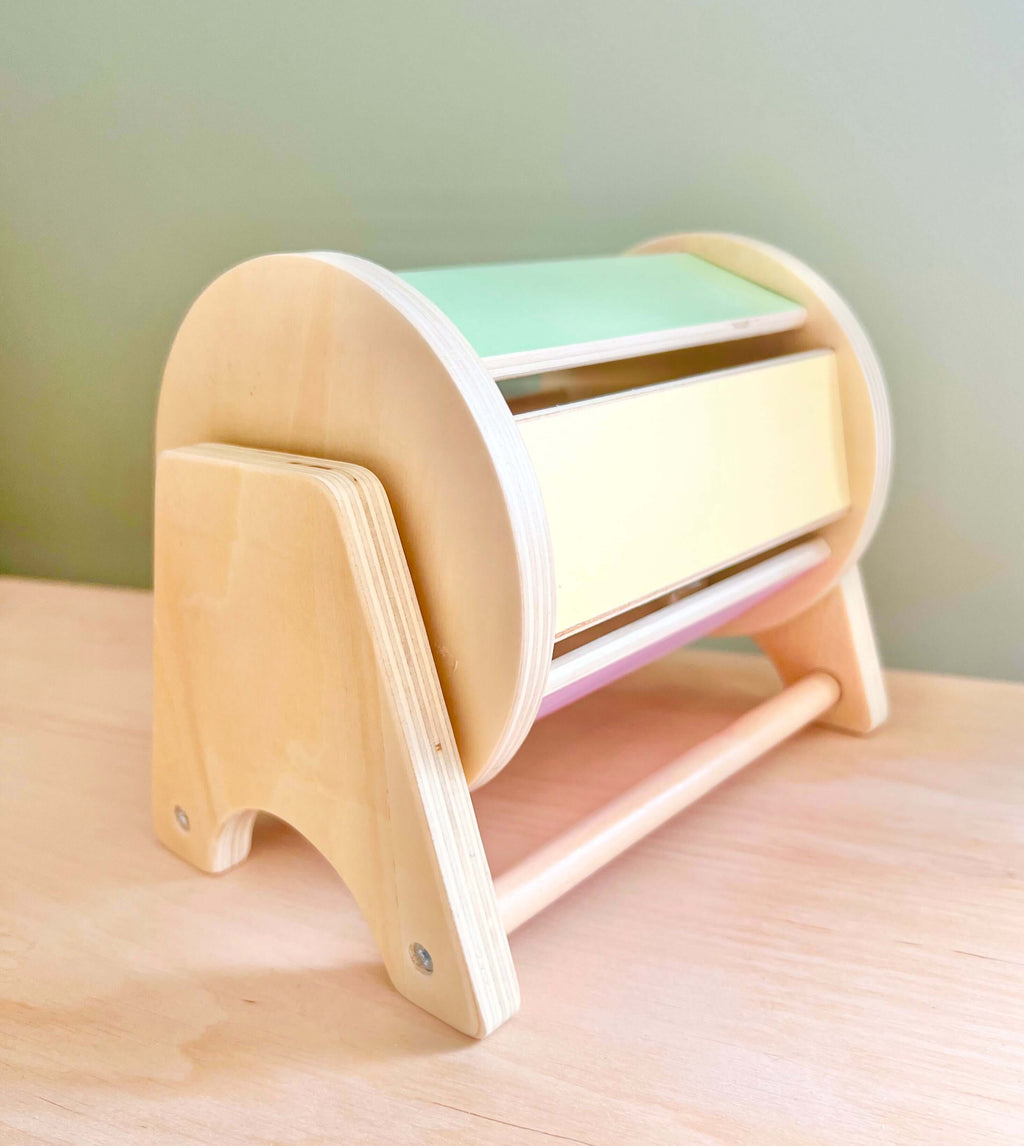
Rolling Drum
The Rolling Drum quickly became a favourite once Daisy started moving around more independently. She loves pushing it across the floor and watching it roll away before crawling after it. The movement encourages her to follow, reach and explore, while the gentle sounds keep her interested without being overwhelming.It’s simple, but it’s one of those toys that seems to hold her attention far longer than you’d expect.
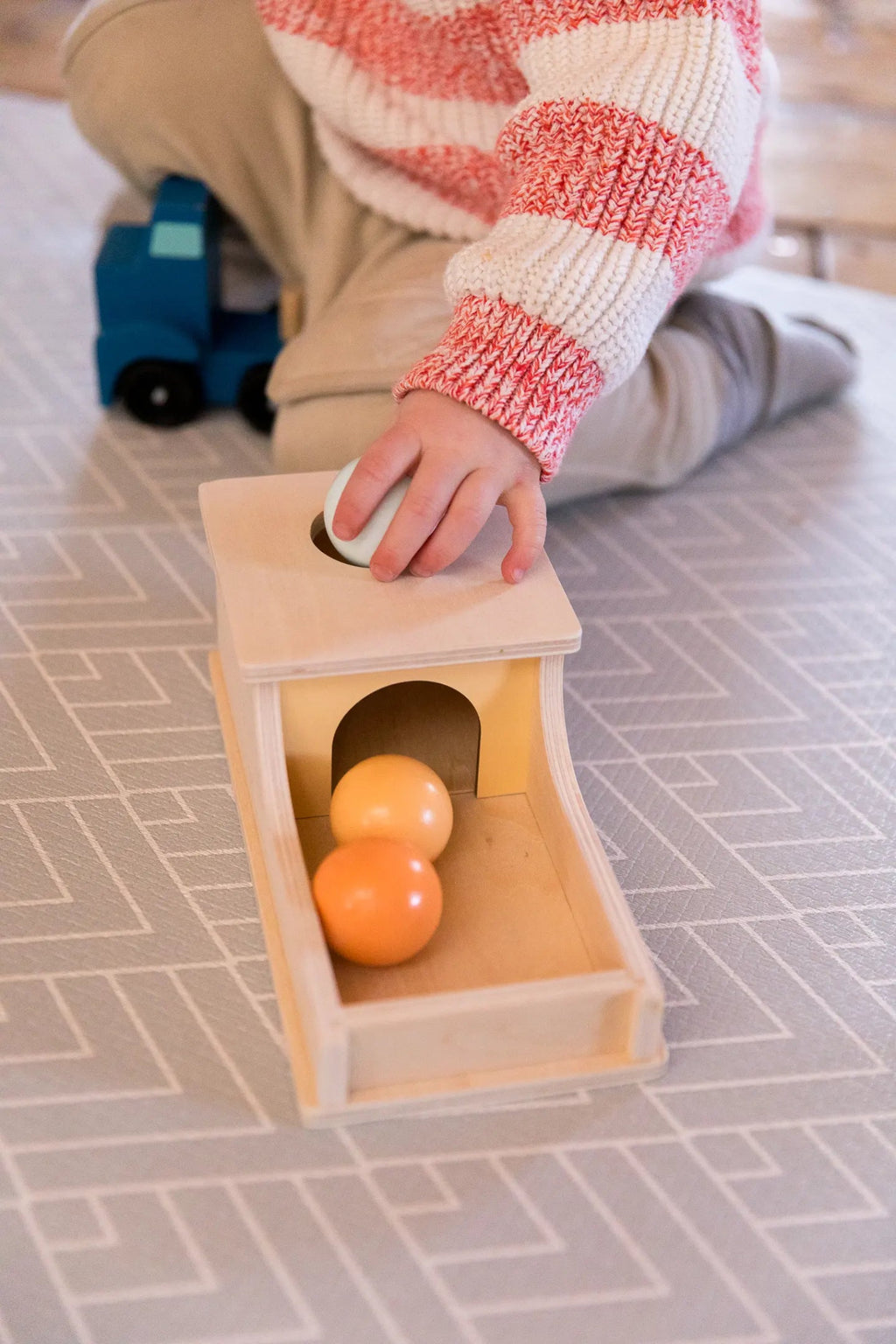
Object Permanence Ball Drop
Around 9 months, Daisy became fascinated by anything that involved putting objects into containers and watching where they ended up. The Object Permanence Ball Drop taps perfectly into that curiosity. She loves placing the ball into the hole and then searching for where it appears. It’s a simple concept, but babies this age often find it endlessly entertaining because they’re beginning to understand that objects still exist even when they can’t see them. It’s become one of those toys she’ll happily return to again and again.
How toys change between 6 and 12 months
If I could go back and tell myself one thing before buying half the toy aisle, it would be this: babies don’t need nearly as much as we think they do. The toys that get the most use in our house aren’t necessarily the most expensive or the most educational. They’re usually the simple ones that can be stacked, emptied, carried around the room and played with in ten different ways.
What babies want from their toys changes incredibly quickly during these 6 months, too:
- 6–8 months: reaching, grabbing, mouthing, sitting and discovering cause and effect
- 9–10 months: crawling, posting, knocking things down and moving objects around
- 11–12 months: pulling up, pushing, stacking and the beginnings of pretend play
That’s why I’ve found the toys that can adapt as they develop tend to last the longest. Something they simply grab and chew at 6 months might be something they’re stacking, posting or pushing around the room a few months later.
And sometimes, despite all the toys available, the wooden spoon still wins.
Always follow the manufacturer’s recommended age guidance.
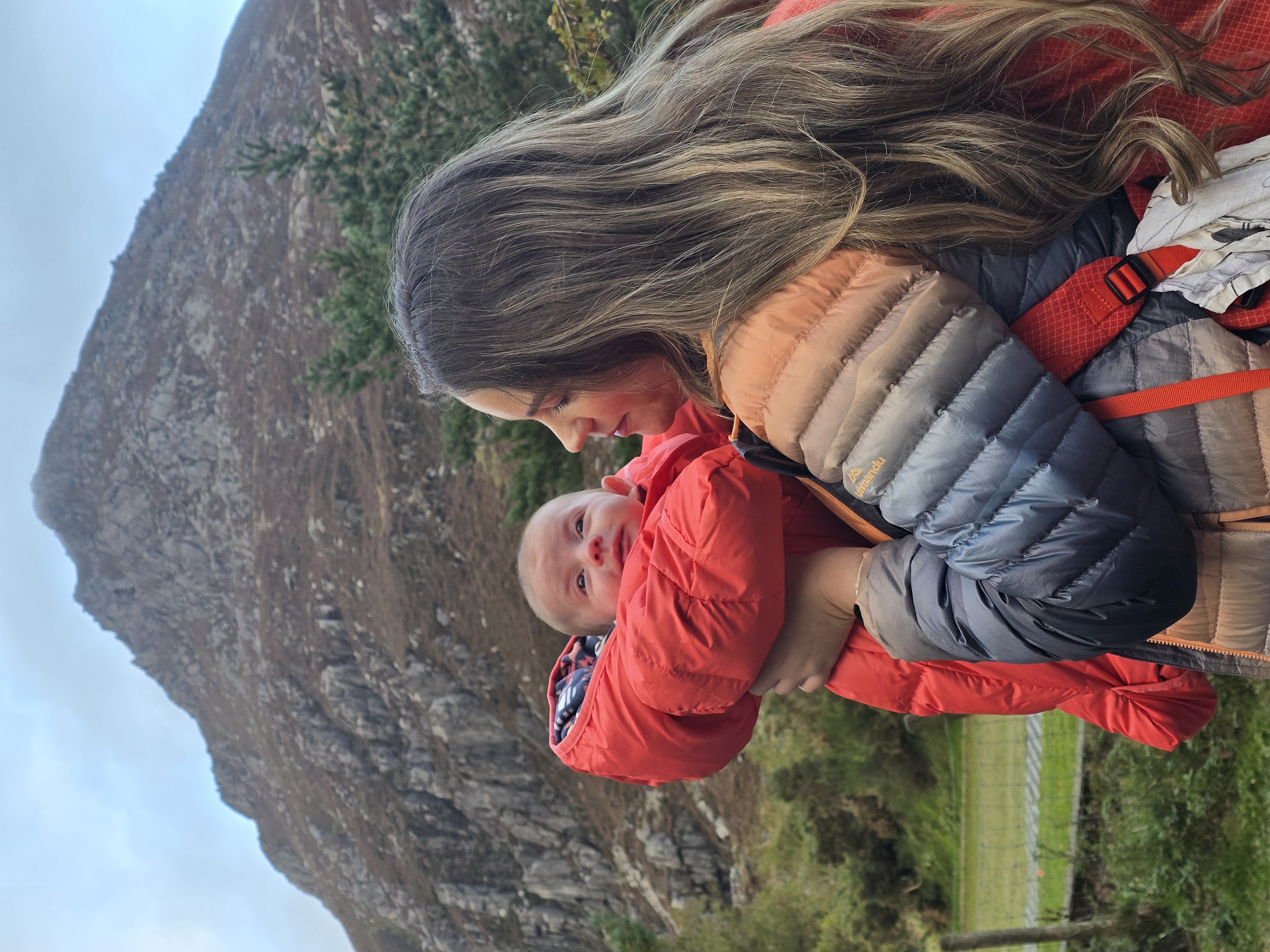
Outdoor Adventure, Travel, and Family Editor.
I share stories from my adventures with my daughter, Daisy, practical gear advice, and tips for navigating family life from my experiences.
Follow Sam’s adventures on Instagram @sams_adventures_

